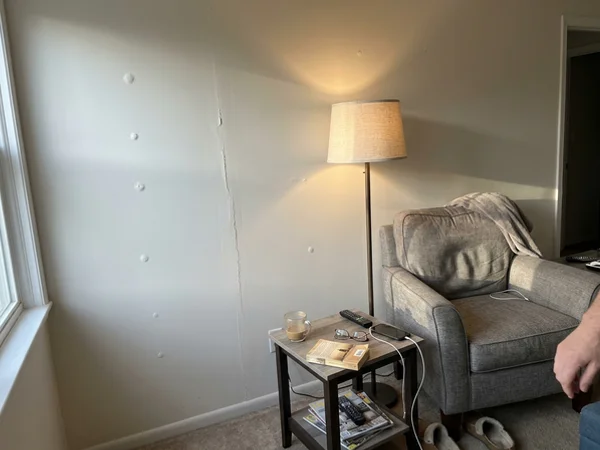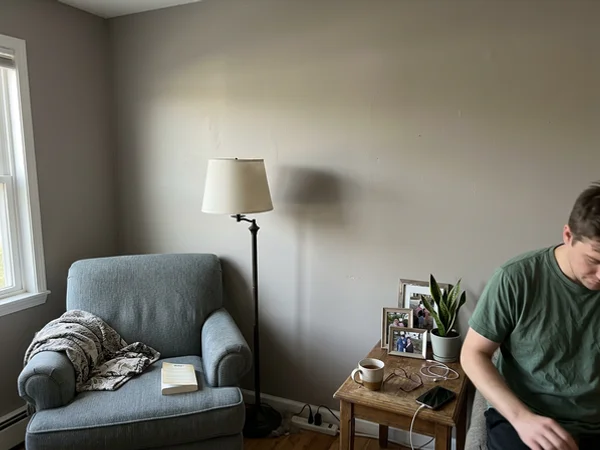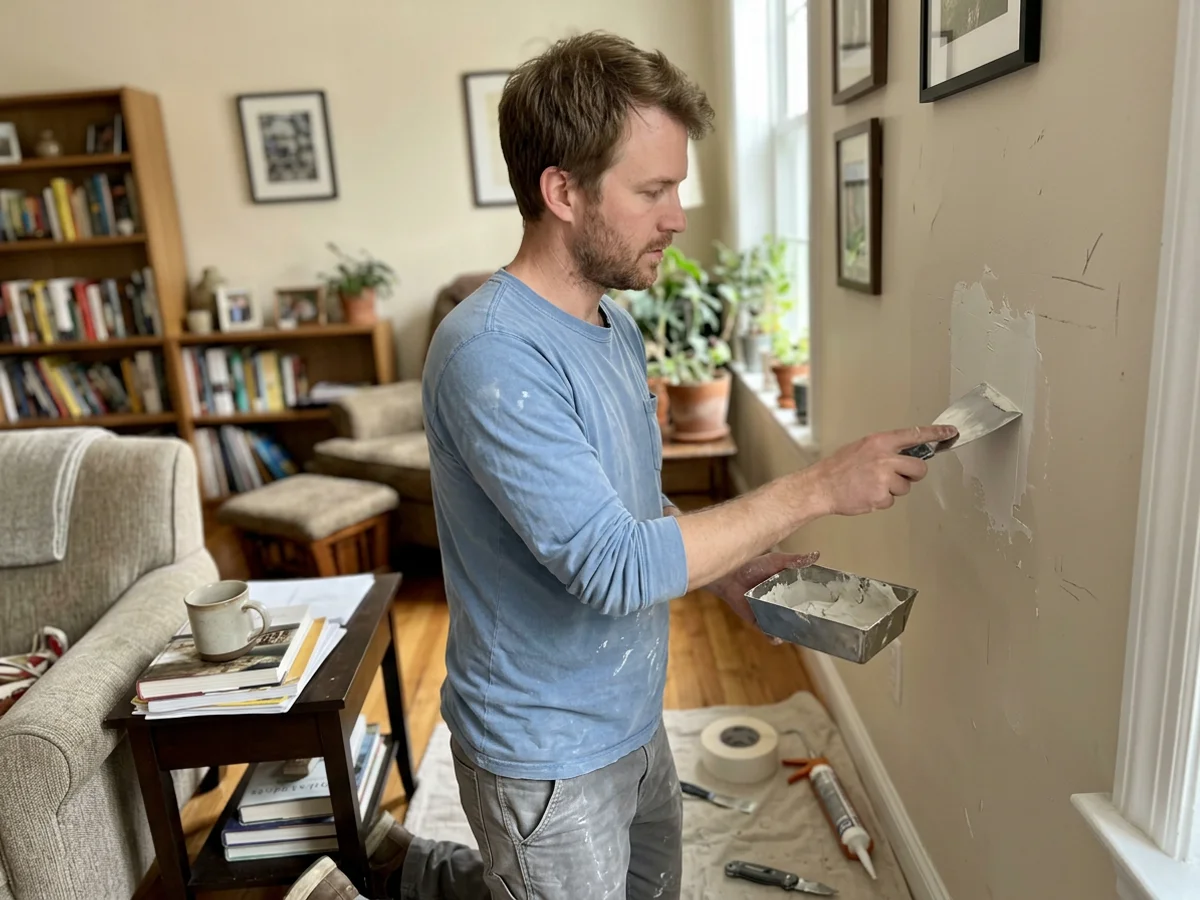
A small crack or nail pop might seem minor until you notice it every time you walk into the room. The real frustration comes when a repair that looked fine at first reappears a few months later, or when a patched area stands out because the texture never matched. According to Angi’s 2026 data, the national average cost for drywall repair is around $613, reflecting the skill required to make damage completely invisible. Professional drywall repair goes beyond filling a hole. It includes matching the existing wall texture, priming the patch, and painting the wall so the damage disappears entirely.
Why Drywall Cracks Keep Returning in Georgetown
Georgetown sits on expansive clay soil that swells during wet periods and contracts hard during dry summers. This constant ground movement puts stress on foundations and framing, which shows up as diagonal cracks above door and window corners, tape joint separations, and nail pops throughout the house.
The Taylor Black Clay that underlies much of the area is particularly aggressive. A 2026 engineering survey noted that over 60% of homes in the greater Central Texas metro experience some degree of foundation movement. In Georgetown neighborhoods like Teravista and Georgetown Village, where homes are reaching the 15- to 20-year mark, these cracks become an annual repair item for many homeowners.
Newer homes in Wolf Ranch and Sun City also develop nail pops as framing lumber dries and shrinks during its first few years, pushing fastener heads out through the surface.
A cosmetic patch over a moving crack will reopen within a season. Our approach addresses the root cause by re-taping joints with the right combination of mesh and paper tape, feathering compound in wide, thin coats, and letting each layer dry fully before the next application. When a crack shows signs of active structural movement, we tell you before covering it up and recommend a foundation inspection.
Our guide on why drywall cracks in Central Texas explains when a crack is purely cosmetic and when it warrants professional evaluation.
How We Repair Drywall from Patch to Paint
Every repair follows the same proven sequence, scaled to the size and type of damage.
- Open and clean the damage. Loose paper and crumbled gypsum are removed first. Water-damaged sections are cut back to solid board.
- Reinforce the area. Inside corners take paper tape. Straight joints and cracks get mesh tape. Large holes receive a new piece of half-inch drywall cut to fit, secured, and taped.
- Apply compound in thin coats. Lightweight joint compound goes on in several thin layers, with each coat feathered wider than the last to eliminate any visible hump or ridge. Each coat dries fully before the next is applied.
- Match the texture. We test the pattern on a scrap board before touching your wall. Whether it is orange peel, knockdown, or smooth, the sprayed or hand-applied texture is blended to match your existing finish.
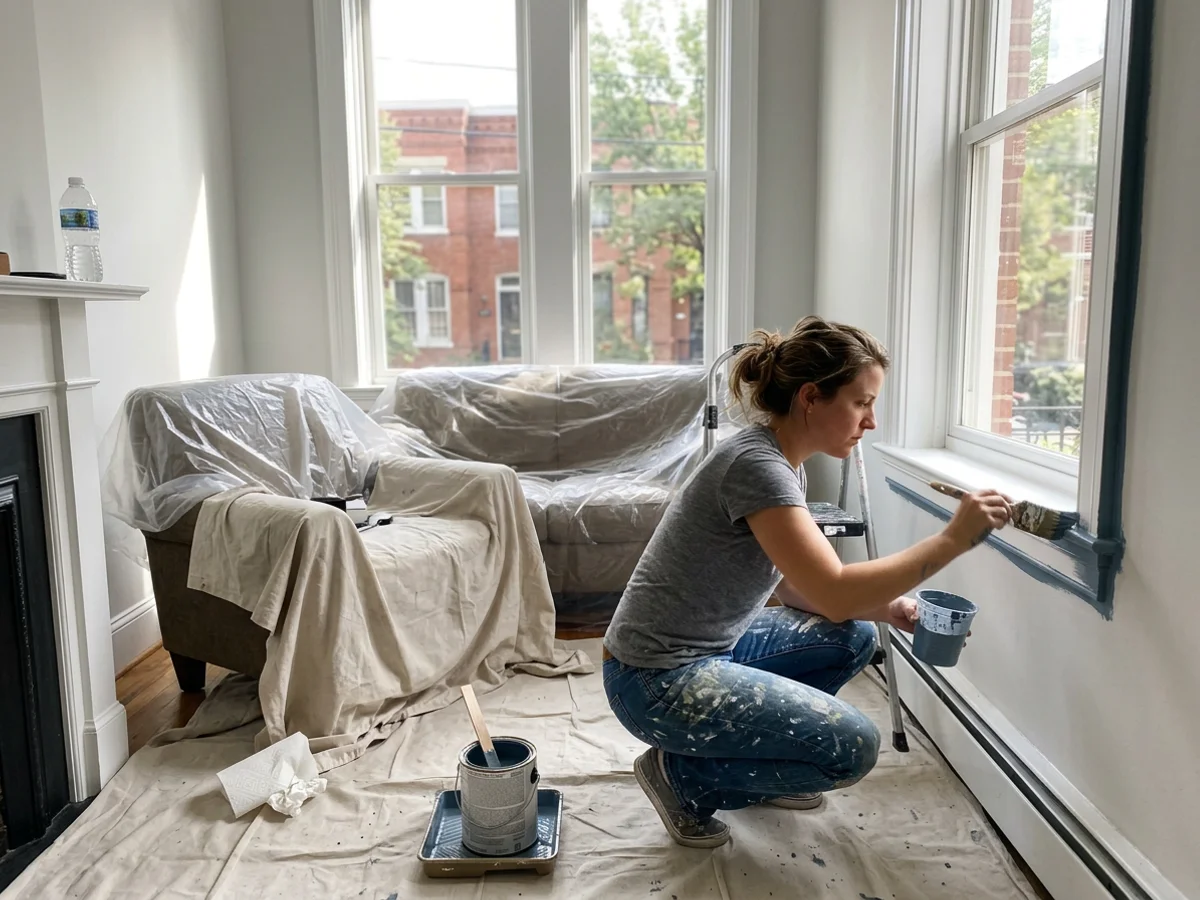
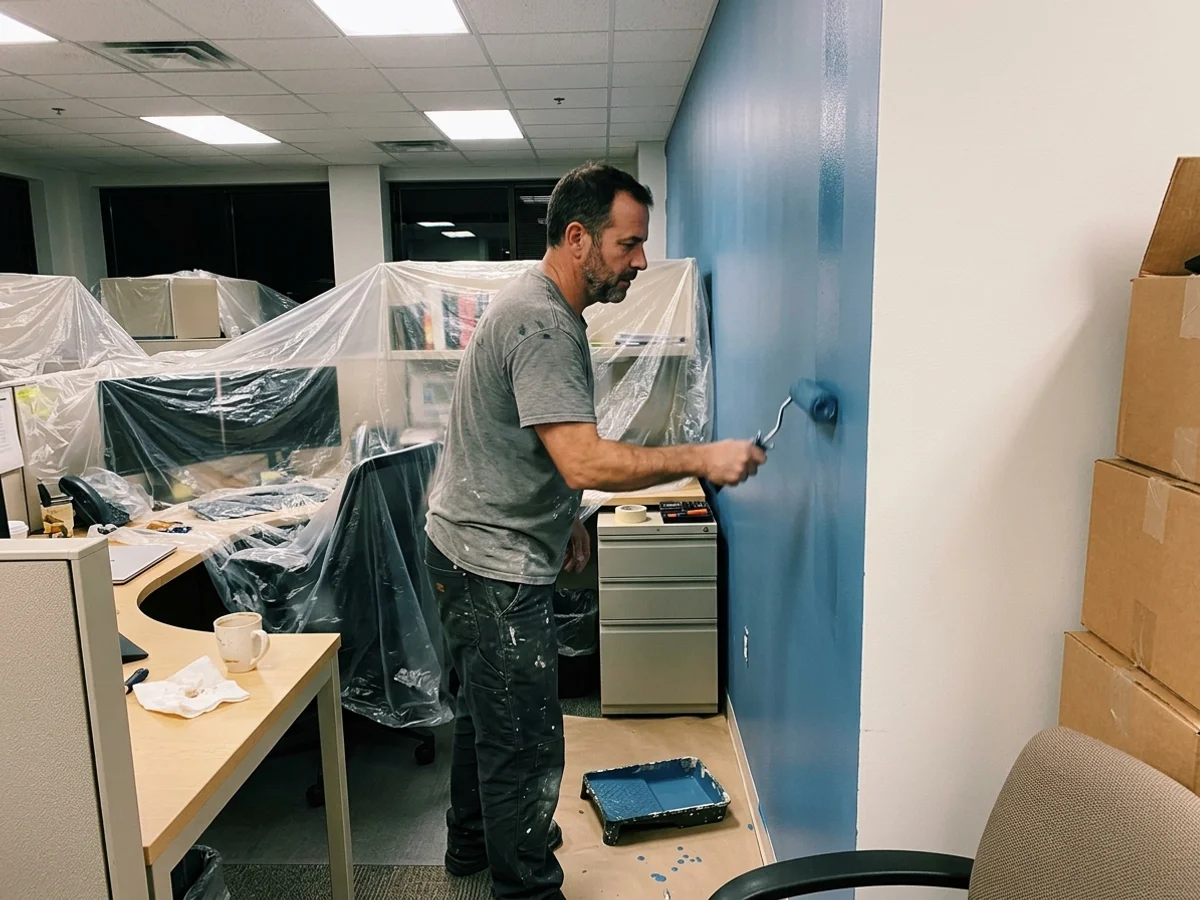
- Seal and paint. A PVA sealer prevents the patch from flashing through the topcoat. The final step is painting the wall, usually corner to corner, so the repair is truly invisible.
We use HEPA-filtered dust control during all sanding work to protect your indoor air quality. Plastic barriers contain dust within the work area, and floors are covered throughout the project.
Matching Orange Peel, Knockdown, and Smooth Textures
Many homeowners worry that a repaired spot will always show. The key is matching the existing texture precisely before any paint goes on. Our crew is trained to replicate the most common patterns found in Central Texas homes.
Orange peel produces fine, uniform bumps sprayed from a hopper gun. Getting the right droplet size and air pressure is critical to a seamless blend.
Knockdown starts with the same spray pattern, then the peaks are flattened with a wide knife at the right moment. Timing matters because waiting too long creates visible drag marks.
Smooth walls are actually the most demanding. Any imperfection shows in raking light. We skim-coat a wider area to reach a Level 5 finish, sanding carefully between coats until the surface is perfectly flat.
Each texture type also carries different material costs. Orange peel runs approximately $1.25 to $1.95 per square foot, knockdown starts above $2.00 per square foot, and smooth Level 5 finishes carry the highest labor cost because of the multiple skim-coat passes required.
Our guide on orange peel vs knockdown texture helps you identify the exact finish on your current walls if you are not sure which one you have.
When to Patch and When to Replace
Small to medium holes patch exceptionally well. We generally recommend cutting in a new section of drywall for large holes, soft water-damaged boards, and areas where the gypsum core has crumbled.
Water damage requires special attention. If the board is soft, moldy, or sagging, it needs to be replaced after the source of the leak is fixed. Firm drywall with only a surface stain can often be sealed with a stain-blocking primer like Kilz and repainted successfully. Our detailed guide on drywall patch vs panel replacement explains how to make that decision.
Never paint over a brown water stain without sealing it first. The discoloration will bleed through every coat of standard acrylic paint.
According to 2026 pricing data from Homewyse, a full-service patch up to one foot across averages between $297 and $472. Our goal is always to recommend the most practical, long-lasting fix for your specific situation.
One Crew for the Complete Job
Coordinating a drywall contractor and a separate painter adds weeks of waiting and often produces visible seams where the handoff happened. Our in-house team handles the repair, texture, primer, and final paint as one continuous project. The same crew that patches the wall is the crew that paints it, which means the texture, sheen, and color all match seamlessly. The result is a finished wall that looks like it was never damaged. We cover the repair, texture, and paint in a single fixed written quote.
Limestone & Lacquer serves homeowners throughout Georgetown and surrounding communities including Round Rock and Pflugerville. Call (512) 555-0182 to book a free estimate for your drywall repair project.