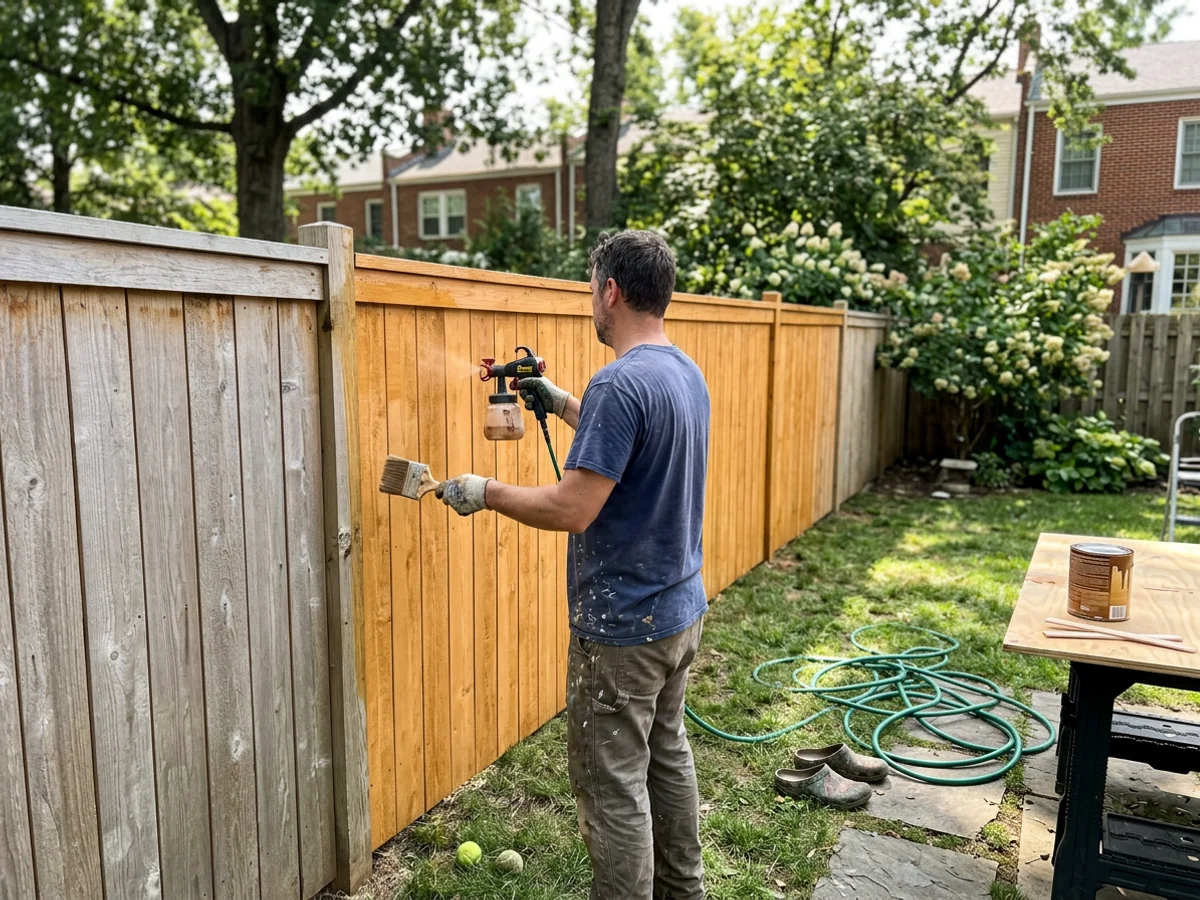
Central Texas sun is relentless on bare wood. A cedar fence that looked warm and golden last spring can turn silver and rough by the end of summer. Without UV protection, the wood fibers break down, split, and become vulnerable to moisture damage that shortens the life of your deck or fence by years. Professional staining stops that cycle and keeps outdoor wood looking its best through every season.
Why Unstained Wood Deteriorates Fast Here
The UV index across Central Texas routinely reaches 8 to 11 during summer months. At that intensity, UV radiation breaks down the polymer bonds on the wood surface, pulling natural oils out of the fibers and leaving them dry, gray, and brittle. Heat compounds the damage by causing expansion and contraction that leads to warping and splitting over time.
Horizontal surfaces like deck boards take even more abuse than vertical fence pickets. They collect standing water, absorb direct overhead sun, and endure constant foot traffic. A deck that goes unprotected through a single Georgetown summer will show noticeably more wear than a shaded fence on the north side of the same yard.
We commonly see this on fences along Williams Drive and in Serenada, where large lots with minimal tree cover leave long runs of fencing fully exposed to afternoon sun.
Our staining process uses products with advanced UV blockers, like the zinc nano-particles found in DEFY Extreme stain, to slow UV-driven graying and protect the wood from water damage. Staining pairs naturally with exterior painting, and scheduling both in one visit saves time and mobilization costs.
Choosing the Right Stain for Your Project
The stain type that works best depends on the age of your wood, its current condition, and how much maintenance you want to handle going forward.
| Feature | Semi-Transparent | Solid |
|---|---|---|
| Look | Shows natural wood grain | Covers grain completely |
| Best For | Newer or good-condition wood | Older, weathered, or mismatched boards |
| Wear Pattern | Fades gradually, no peeling | Lasts longer on fences, can peel on decks |
| Re-Coat Interval | Every 2 to 3 years | Every 3 to 5 years on vertical surfaces |
| Avg Material Cost | $40 to $55 per gallon | $45 to $65 per gallon |
For decks, we generally recommend penetrating oil-based stains like TWP 1500 Series. These soak deep into the wood and wear away naturally instead of forming a film that peels under foot traffic and standing water.
Tannin bleed is a particular concern with cedar. Natural tannins can discolor light-colored stains, especially during the first year. Proper cleaning with an oxalic acid brightener before application helps prevent this discoloration. Our full comparison is in semi-transparent vs solid stain.
New Fence Staining in Georgetown Subdivisions
Georgetown’s rapid growth means thousands of homes in communities like Wolf Ranch, Heirloom, and the newer sections of Teravista have brand-new cedar or pressure-treated pine fences. New lumber needs time to dry before stain will absorb properly. Applying stain to wet wood traps moisture inside and prevents proper penetration, which leads to premature failure.
The rapid pace of construction means many of these fences sit unprotected through their first summer, which accelerates graying and drying. We test every new fence with a digital moisture meter before application. Wood needs to show a moisture content at or below 15% for stain to soak in correctly. Depending on the lumber type and weather conditions, new fences may need several weeks of drying time after installation.
Our guide on when to stain new cedar or pine explains the drying process and what to watch for. If your builder just finished your fence, we can inspect it and let you know exactly when it will be ready.
How We Clean, Prep, and Apply Stain
Our process has three phases, each one critical to a finish that lasts.
- Clean and brighten. We wash away dirt, mildew, and gray surface fibers with a specialized wood cleaner. A brightener, usually an oxalic acid solution, goes on next to restore the wood’s natural color and open the pores for stain absorption.
- Dry and test. We check boards with a digital moisture meter instead of guessing by feel. Stain applied to wood above 15% moisture simply sits on the surface and peels.
- Apply and back-brush. We spray or roll the stain onto the wood, then immediately back-brush it into the grain for even penetration. Excess stain is wiped away so the finish does not become sticky or start to peel. This final step is what separates a professional staining job from a quick spray-and-walk. Without back-brushing, stain sits unevenly on the surface and wears off in patches.
Common issues we address during prep include gray weathered wood, blotchy old stain from a previous DIY job, peeling solid stain on horizontal deck boards, and tannin bleed from cedar that discolors lighter finishes.
How to Tell When Your Deck or Fence Needs Re-Staining
The simplest test is the water bead check. Sprinkle a few drops of water on the surface. If the water beads up, the existing finish is still protecting the wood. If it soaks in and darkens the board within ten minutes, the wood is ready for a fresh coat.
Most fences in Central Texas need re-staining every two to four years, with sun-exposed sides fading faster than shaded ones. Decks wear faster because of direct sun, standing water, and foot traffic.
According to 2026 industry data, the national average cost of professional deck staining sits around $1,281. Costs vary based on deck size, condition, and product selection.
Our fence staining cost guide explains local pricing in detail, and our guide on how often to stain a deck or fence in Texas covers typical maintenance intervals for the area.
Limestone & Lacquer serves homeowners across Georgetown and surrounding communities including Round Rock and Cedar Park. Call (512) 555-0182 to schedule your free staining estimate.