
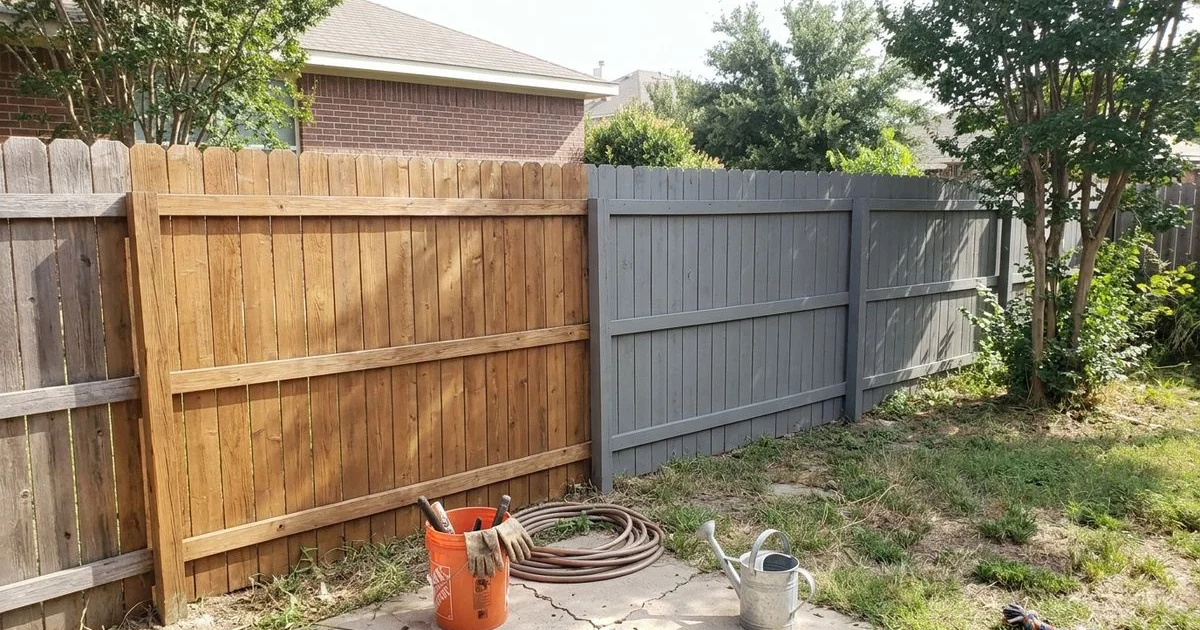
Opacity Determines Everything
The choice between semi-transparent vs solid stain goes far beyond appearance. Opacity level dictates how wood handles moisture, UV damage, and long-term maintenance. Selecting the wrong finish leads to premature peeling and expensive restoration work that could have been avoided with a better initial decision.
This guide compares both stain types across the factors that matter most for Georgetown deck and fence staining projects: durability, grain visibility, recoating ease, and the ability to switch directions later.
How Semi-Transparent Stain Works
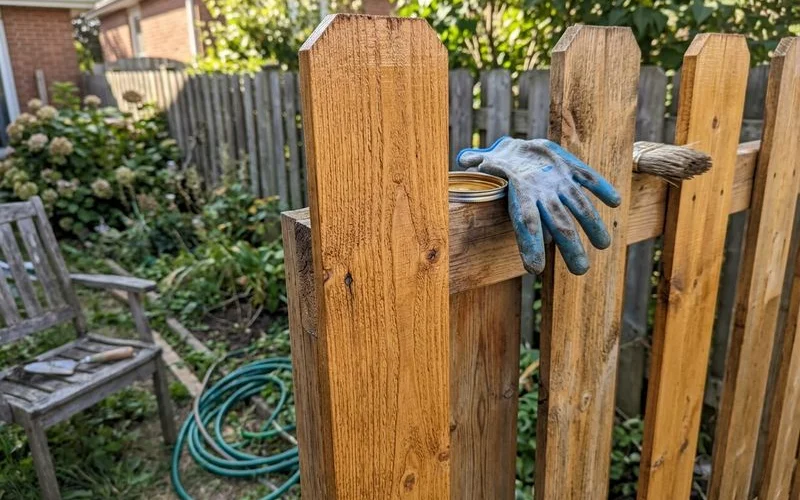
Semi-transparent stain contains a moderate amount of pigment that penetrates directly into the wood fibers rather than forming a surface film. The grain pattern and natural variation of the lumber remain visible through the tinted coating.
Oil-based penetrating formulas like Ready Seal allow the wood to breathe, which is critical in humid subtropical climates like Central Texas. A standard semi-transparent application lasts two to three years on horizontal decks and up to five years on vertical fences.
Advantages
- Showcases wood grain, especially on quality cedar
- Fades gradually instead of peeling in sheets
- Recoats easily without stripping the previous application
- Provides solid UV protection when loaded with trans-oxide pigments
Limitations
- Cannot mask weathered, gray, or mismatched boards
- Requires more frequent recoating, particularly on deck floors
How Solid Stain Works
Solid stain is heavily pigmented and behaves almost identically to a thin paint. It completely covers the wood grain while preserving some surface texture. Ingredients like titanium dioxide block harsh UV rays and protect the underlying lumber from photodegradation.
High-quality solid products like Sherwin-Williams SuperDeck and Benjamin Moore Arborcoat last five to ten years on vertical fencing. These premium acrylic formulations typically retail for $50 to $65 per gallon in 2026.
Advantages
- Hides weathered, gray, or patched wood completely
- Evens out mismatched replacement boards
- Lasts significantly longer on vertical surfaces
- Available in a wide range of architectural colors
Limitations
- Peels on horizontal deck boards under foot traffic
- Extremely difficult to reverse once applied
- Conceals the natural beauty of premium wood species
The Horizontal Surface Problem
This is the critical factor for deck floors. Solid stain forms a distinct surface film that absorbs the direct impact of foot traffic, standing water, and intense sun. Over time, the film wears through in high-traffic paths and cracks elsewhere.
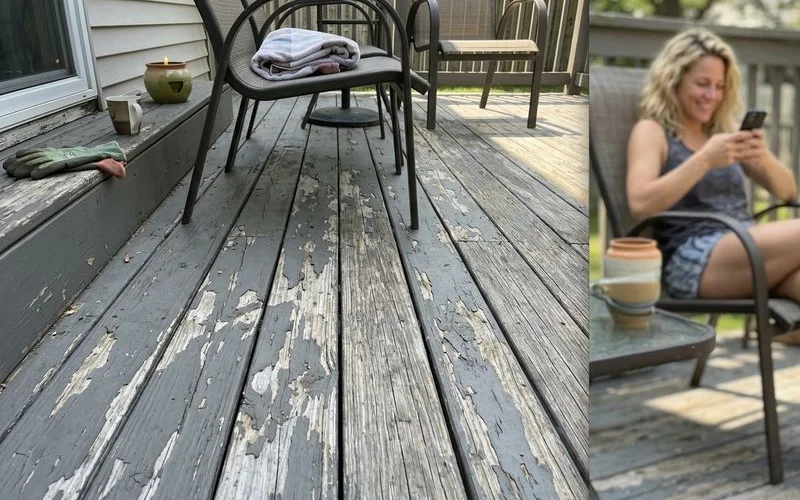
Repairing a failed solid coating is labor-intensive. You cannot simply apply another coat over peeling film. Chemical strippers and thorough sanding with 80-grit paper on a random orbital sander are required to remove the old finish down to bare wood.
Semi-transparent stain soaks into the fibers and wears away gradually. When maintenance time arrives, you clean the surface and apply a fresh coat without fighting any peeling material.
Performance Comparison
| Feature | Semi-transparent | Solid |
|---|---|---|
| Grain visibility | Yes | Mostly hidden |
| Hides weathered wood | No | Yes |
| Fence lifespan | 3 to 5 years | 5 to 10 years |
| Deck lifespan | 2 to 3 years | 3 to 5 years (with peeling risk) |
| Recoating difficulty | Easy | Easy if same type |
| Switching direction | Can move to solid | Must strip to go back |
| Best application | Newer wood, decks | Older fences, mismatched boards |
Switching Between Stain Types
Moving from semi-transparent to solid is straightforward. Clean the wood with a specialized wood cleaner and apply the solid product. This transition works well for older, graying fences that have outlived their natural appearance.
Moving from solid back to semi-transparent requires chemically breaking down the existing film with a dedicated stain remover, followed by an acidic wood brightener to restore the wood’s natural pH balance. This process is time-consuming and often leaves trace pigment embedded in the grain. Most property owners who switch to solid stay with it permanently.
If you are uncertain, start with semi-transparent. You always have the option to move to heavier coverage later.
Penetrating Oil: A Third Option for Decks
For horizontal decking, a true penetrating oil-based stain provides an excellent alternative. These formulas soak deeply into the cellulose fibers instead of building a surface film. Premium products like Cabot Australian Timber Oil offer strong protection against both water damage and color loss.
Penetrating oils fade slowly rather than peeling. Recoating every two years requires zero sanding. This makes them the lowest-maintenance option for deck floors specifically.
Standard Recommendations by Scenario
Every property has unique sun exposure and moisture patterns, but these guidelines apply to most Georgetown projects:
- New cedar fence: Semi-transparent to highlight the natural grain
- New pressure-treated pine fence: Allow 60 to 90 days of weathering, then apply either type
- Older, gray, or patched fence: Solid stain to mask imperfections
- Deck floor: Semi-transparent or penetrating oil to prevent peeling
- Deck railings: Either option, often matched to the perimeter fence
Material Cost Differences
Stain type affects your material budget modestly, but preparation labor and surface accessibility have a much larger impact on the total project cost. Premium penetrating oil runs approximately $45 per gallon. High-end solid acrylics exceed $60 per gallon.
Our guide on fence staining cost breaks down the full financial picture for local properties.
Color Selection
Semi-transparent options stay within the natural wood spectrum: cedar, redwood, honey, and light walnut tones. Solid stains offer a much broader architectural palette including slate grays, deep blues, and custom tint matching to complement your home’s exterior.
Popular solid choices for 2026 include modern slate gray and rich russet brown. Before selecting a final color, consider these factors:
- Architecture matching to complement window trim and roof color
- Heat retention since darker solid stains absorb more sunlight and raise surface temperature
- HOA requirements since many Williamson County neighborhoods maintain pre-approved color lists
Coat Count and Coverage
Semi-transparent stain typically goes on in a single even layer yielding 150 to 250 square feet per gallon. Back-brushing pushes oils deep into the wood and prevents a sticky surface. Very porous or heavily weathered boards may need a light second pass.
Solid stains require two full coats for rated durability and complete color uniformity. The dual application allows titanium dioxide pigments to form an effective UV barrier.
Long-Term Maintenance
- Semi-transparent: Clean with a mild brightener and recoat every two to three years. No stripping or heavy sanding required.
- Solid: Wash annually. Apply a fresh coat when pigment visibly fades. If peeling occurs, scrape and sand loose areas to bare wood first.
- Penetrating oil: Apply a light maintenance coat every 24 months to maintain water-repellent properties.
Choose With Confidence
During your consultation, Limestone & Lacquer evaluates the age of your lumber, assesses any previous coating, and discusses your long-term maintenance preferences. Physical sample boards let you see how Georgetown sunlight hits different pigments in your actual yard. Contact our team to schedule your site visit.