
General Timelines
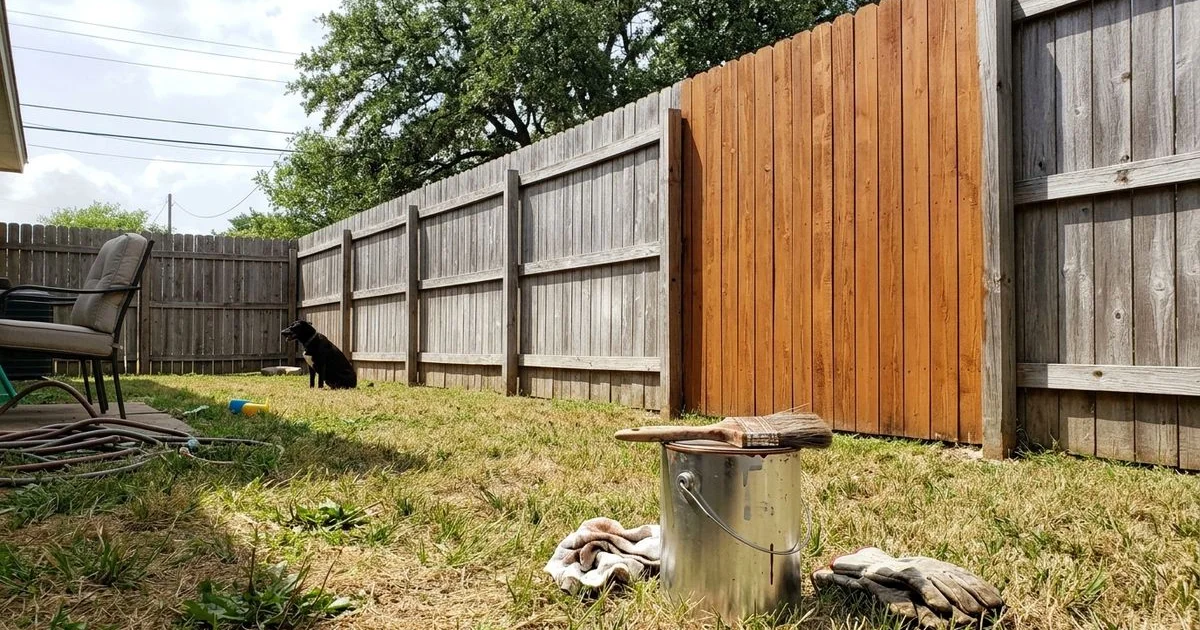
Most Texas fences need a fresh coat every two to four years. Horizontal deck surfaces demand attention more frequently, typically every one to three years. These intervals shift based on sun exposure, the stain formula applied, and how well drainage works around the structure.
Georgetown’s UV index regularly exceeds 11 during summer months, rapidly breaking down unprotected wood fibers. Catching seal failure early prevents the kind of structural damage that turns a simple maintenance coat into an expensive restoration project.
Our team helps property owners assess their wood before problems spread. Learn more about our deck and fence staining services and what each proposal includes.
Intervals by Surface and Stain Type
The fence stain lifespan varies significantly based on both the orientation of the wood and the chemistry of the product.
| Surface and stain | Typical interval in Texas sun |
|---|---|
| Fence, semi-transparent stain | About 2 to 4 years |
| Fence, solid stain | About 4 to 6 years |
| Deck floor, semi-transparent stain | About 1 to 3 years |
| Deck floor, solid stain | About 2 to 4 years, with peeling risk |
| Deck railings and vertical parts | Similar to fences |
South and west-facing installations absorb the worst afternoon heat and sit at the short end of every range. Premium penetrating oils like TWP 1500 Series may extend the interval by a season, but sun exposure ultimately dictates the schedule. Shaded areas can last nearly twice as long as fully exposed sections.
Why Decks Wear Faster
Horizontal surfaces take punishment from every direction. Flat boards receive direct overhead sun for eight to ten hours daily, standing water pools after storms, shoes and furniture create constant friction, and wet leaves trap moisture against the grain.
A fence built on the same day as an adjacent deck will consistently look better after two years. Vertical pickets shed water naturally and only face the sun from one angle at a time. Gravity works in the fence’s favor and against the deck’s longevity.
The Water-Beading Test
This one-minute test reveals whether your protective seal is still functional.
- Sprinkle clean water across several sections, focusing on the sunniest areas.
- Watch the surface closely for about sixty seconds.
- If water beads up, the seal is intact and still repelling moisture.
- If water soaks in and the wood darkens, the protective layer has failed.
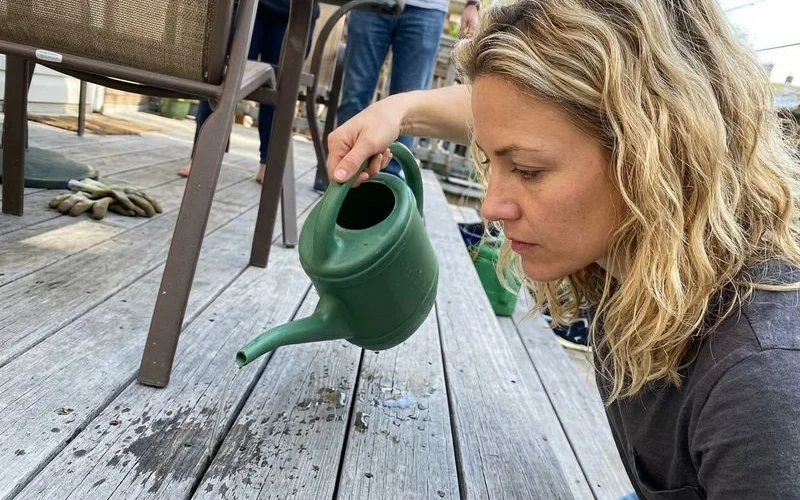
Test multiple locations because the sunny side of a structure almost always fails before the shaded side. Perform this check every spring before Georgetown’s intense summer heat arrives. A single failing spot means a full recoat is approaching.
Warning Signs Beyond the Water Test
Visual cues confirm what the water test reveals.
- Graying. UV radiation breaks down lignin in the wood, turning the surface a dull silver-gray.
- Fading color. The applied pigment looks washed out, uneven, or blotchy.
- Checking and splitting. Micro-cracks appear as the timber rapidly expands and contracts through temperature swings.
- Peeling. The topcoat flakes off in sheets, common with heavily pigmented acrylics on flat surfaces.
- Mildew or dark spots. Fungal growth takes hold in damp, shaded corners where moisture accumulates.
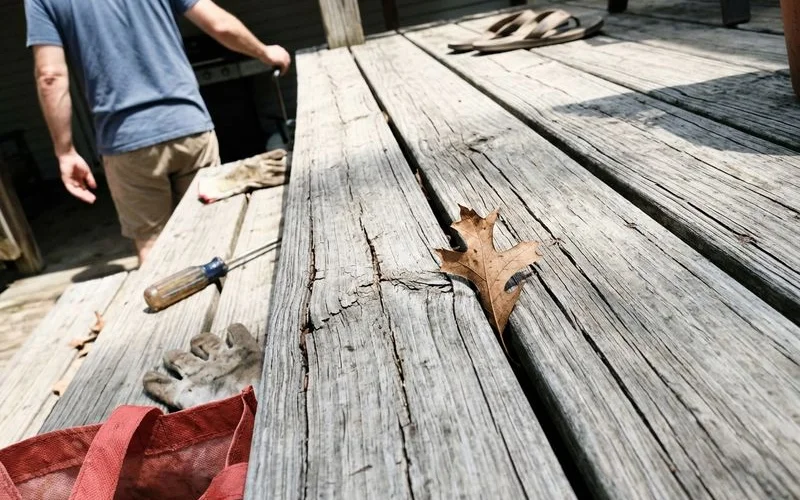
Excessive graying is a serious warning. Once wood fibers reach this stage, they begin losing structural integrity. Stripping and neutralizing the surface promptly halts the decay process.
How Stain Chemistry Affects the Schedule
Penetrating oil-based products soak into the wood grain and fade gradually rather than cracking or peeling. This graceful aging makes recoating straightforward because there is no film to strip.
Solid stains containing dense pigments like titanium dioxide provide maximum UV reflection and last longer on vertical pickets. On horizontal deck boards, these heavy coatings tend to peel, creating a labor-intensive stripping job at the next recoat.
Our guide on choosing a stain type compares the performance characteristics of each formula in detail. Matching the chemistry to the application prevents premature failure and saves significant labor costs on future maintenance.
The Cost of Waiting Too Long
A routine maintenance coat involves a basic wash and a single application of fresh stain. Severely neglected wood requires chemical stripping, mechanical sanding, and acid brightening to restore the surface before any new product can adhere.
In 2026, a professional fence refresh in Texas costs roughly $3.50 to $7.00 per linear foot. A composite deck replacement now averages $9,000 to $18,000. The gap between routine maintenance and structural replacement is enormous, and Central Texas heat accelerates the timeline from weathered to rotting faster than most homeowners expect.
Maintenance Habits That Extend the Cycle
Proactive yard management significantly reduces the impact of weather on your wood surfaces.
- Redirect sprinklers away from fences and decks to prevent hard water stains and constant saturation.
- Sweep decks regularly so wet leaves and abrasive dirt do not sit on flat boards.
- Trim vegetation at least twelve inches from vertical pickets to maintain airflow.
- Avoid chlorine-based cleaners that damage the cellular structure of cedar and pine.
- Run the water test annually in early spring before summer arrives.
Shade vs Full Sun
Sun-drenched wood dries out and cracks rapidly. Heavily shaded sections stay damp and develop mildew. Two sides of the same property demand different maintenance strategies.
Sunny sections need stain formulas packed with UV-blocking pigments and resign on a tighter recoat schedule. Shaded areas need aggressive cleaning to kill deep-rooted mold spores but often go a full year or two longer between stain applications. Limestone & Lacquer adjusts preparation methods for each zone rather than treating the entire structure identically.
Bundling With Other Exterior Work
Scheduling wood maintenance alongside an exterior house repaint or siding repair eliminates duplicate mobilization costs. October and March locally offer the best curing conditions with temperatures consistently between 60 and 80 degrees.
Grouping fence repairs, staining, gutter cleaning, and exterior painting into a single contract keeps the final invoice lower and ensures all exterior surfaces coordinate visually.
What a Professional Re-Stain Includes
Every Limestone & Lacquer staining project follows a defined sequence: sodium percarbonate wash, oxalic acid brightening, minor structural repairs, and spray-and-backbrush application of a commercial-grade penetrating finish. The backbrush step forces the protective oils deep into the grain rather than letting them sit on top.
Schedule Your Assessment
Walk your property today and sprinkle water on the most exposed wood surfaces. If the water soaks in, your structural protection is already gone. Contact our Georgetown team for an on-site evaluation and a fixed written quote before the summer heat sets in.