
Understanding the Price Spread
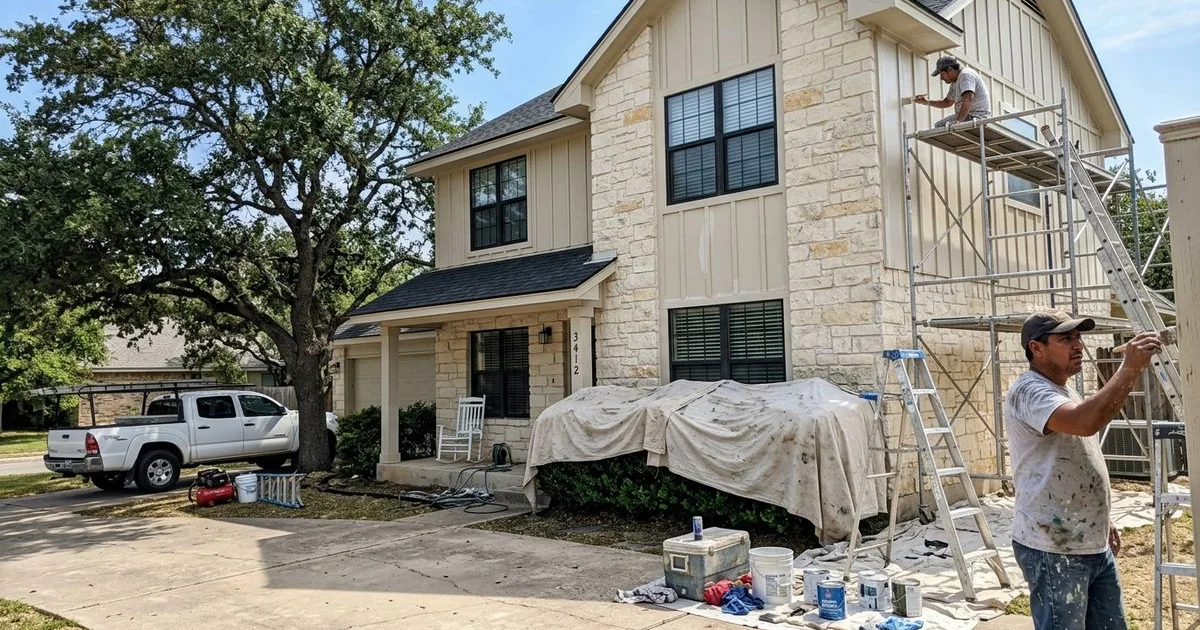
Property owners across Georgetown and the broader Central Texas region frequently tell us the same thing: getting a clear answer on exterior painting costs feels overwhelming. Typical quotes for a standard single-family home range from $3,500 to $9,500, and that gap frustrates people trying to set a realistic budget.
The spread exists because exteriors are labor-intensive projects. Your final price depends on total paintable surface area, the number of stories, the siding material, and the depth of preparation required. Each of these variables compounds the others, which is why two homes on the same street can produce drastically different estimates.
Our Georgetown exterior painting services page details how we structure fixed-price proposals to eliminate guesswork.
Seven Variables Behind Every Estimate
Paintable Square Footage
Exterior measurements differ from interior living area. A home with 2,000 square feet of interior space often presents 2,500 or more square feet of siding, trim, soffits, and gable ends. Elaborate architectural details like deep eaves, decorative shutters, and multi-plane rooflines add brushwork hours that drive the labor portion higher.
One gallon of premium exterior paint covers roughly 300 to 400 square feet on smooth surfaces. Textured substrates absorb more material per pass, stretching the gallon count further.
Stories and Access Difficulty
Multi-story homes cost up to 50 percent more than single-story ranches. Extension ladders, scaffolding, and boom lifts require additional setup time and strict safety protocols. Properties in hillier neighborhoods like Cimarron Hills present steep grades that restrict equipment placement and slow progress.
Tight lot lines common in newer developments also force crews to work more carefully around neighboring structures.
Siding Material
Your substrate determines how much paint the walls absorb and what prep techniques apply.
- Fiber cement (Hardie board): Stable and efficient to paint, with predictable coverage rates.
- Wood siding: Shrinks and swells under Texas heat cycles, demanding intensive scraping, sanding, and spot priming on aged surfaces.
- Stucco: Porous and heavily textured, consuming significantly more material per square foot and often requiring specialized elastomeric products.
- Mixed facades: Combinations of stone, brick, siding, and stucco require extensive masking and hand-brushing at every transition.
Surface Preparation
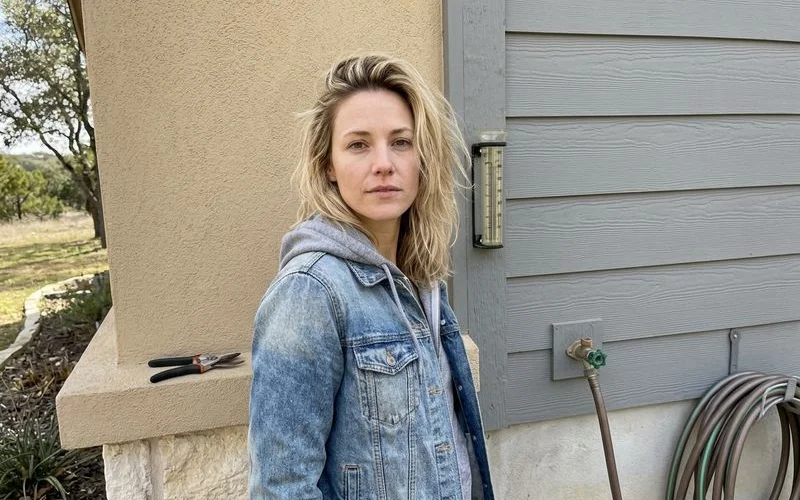
Prep work is the single largest variable in any exterior quote and frequently takes longer than the painting itself. A well-maintained home may only need a pressure wash and minor caulk touch-ups. Neglected siding with heavy chalking, widespread peeling, or failed joints demands days of scraping and priming.
Replacing damaged fascia boards averages $14 to $22 per linear foot nationally. Our detailed breakdown of what prep adds to a project timeline covers every step.
Elastomeric Coatings for Stucco
Georgetown’s reactive clay soils cause constant structural micro-movement, producing hairline cracks across rigid stucco surfaces. Elastomeric coatings apply at 10 to 20 mils thick compared to 3 to 5 mils for standard acrylic, creating a flexible, waterproof membrane that bridges gaps up to 1/16 inch.
This specialized material and the labor-intensive application naturally push stucco projects higher than standard siding repaints. Our guide to elastomeric coatings for stucco explains the conditions that justify the premium.
Product Line
Central Texas UV exposure destroys budget paint rapidly. Premium 100% acrylic latex formulas from lines like Sherwin-Williams Emerald ($85 to $120 per gallon retail) deliver significantly better color retention and chalking resistance. The upfront cost pays for itself through extended recoat intervals and reduced maintenance.
Number of Colors
Each additional accent color requires precise cutting in and masking. A two-color body-and-trim scheme moves efficiently. Adding contrasting window sashes, shutters, and doors increases labor hours substantially. Keeping the palette to two colors is the simplest way to control your budget.
Summarizing the Cost Drivers
| Driver | Cost increases when… |
|---|---|
| Square footage | Large homes with detailed trim and multiple gables |
| Access | Two stories, steep grades, narrow lot lines |
| Substrate | Aged wood, porous stucco, mixed facade materials |
| Prep condition | Heavy peeling, severe chalking, failed caulk, wood rot |
| Coating type | Elastomeric applications on cracked stucco |
| Product line | Premium paints with UV and moisture resistance |
| Color count | Three or more accent colors requiring detailed masking |
Reading a Professional Quote
A trustworthy estimate should specify every line item so you can compare proposals accurately. Look for these details before signing.
- Surfaces: Body, trim, fascia, soffits, doors, garage doors, and shutters.
- Prep scope: Pressure washing, scraping, caulking, priming, and any carpentry repairs.
- Products: Specific brand, line, and sheen for each surface.
- Coats: Clear primer and topcoat quantities.
- Colors: Exact shades or a deadline for final selection.
- Schedule: Firm start date and estimated duration.
- Payment: Deposit requirements and milestone payments.
- Warranty: Duration in years and what failures are covered.
If a contractor omits any of these details, request revisions before you commit.
Why Flat-Rate Pricing Falls Short
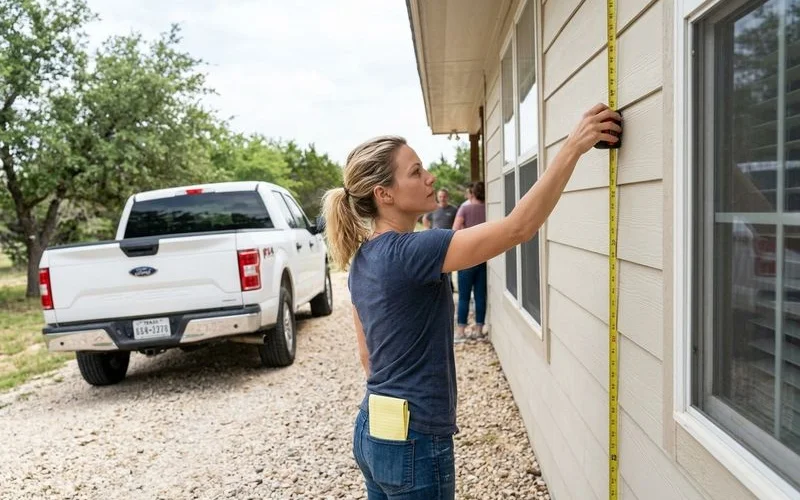
Publishing a standard price list is a disservice because it ignores the unique condition and access challenges of each property. An over-the-phone square footage number skips the factors that actually move the price. The Limestone & Lacquer estimating team visits your property to measure in person, inspect siding conditions, and check roofline access. You receive one fixed number in writing after this thorough evaluation.
Hidden Costs in Lowball Bids
A suspiciously low bid often excludes items that should be standard.
- Rotten wood repair averaging $14 to $22 per linear foot
- Full caulking of every open exterior joint, not just spot treatment
- Primer on bare or repaired wood to prevent premature peeling
- Second finish coat that some cheap bids skip entirely
- Accent items like garage doors billed as extras
- Property protection for landscaping, vehicles, and outdoor furniture
A transparent quote either folds these into the base price or lists them as clearly defined optional add-ons.
Controlling Your Exterior Budget
Strategic choices reduce cost without sacrificing quality.
- Paint before damage spreads. Repainting while siding is sound costs far less than repairing rotten trim later.
- Bundle projects. Pair exterior walls with fence staining or front door refinishing so the crew mobilizes once.
- Simplify the color scheme. Fewer accents mean less masking and faster brushwork.
- Time it right. Fall and spring locally offer optimal curing conditions with fewer weather delays.
- Phase the work. Trim and fascia now, body later, if your budget requires staging.
Get Your Fixed Number
The only precise way to determine your exterior painting cost is a professional site visit. We measure, inspect, and explain every line item in the proposal.
Get a fixed written quote and compare it against any other estimate you have received.