
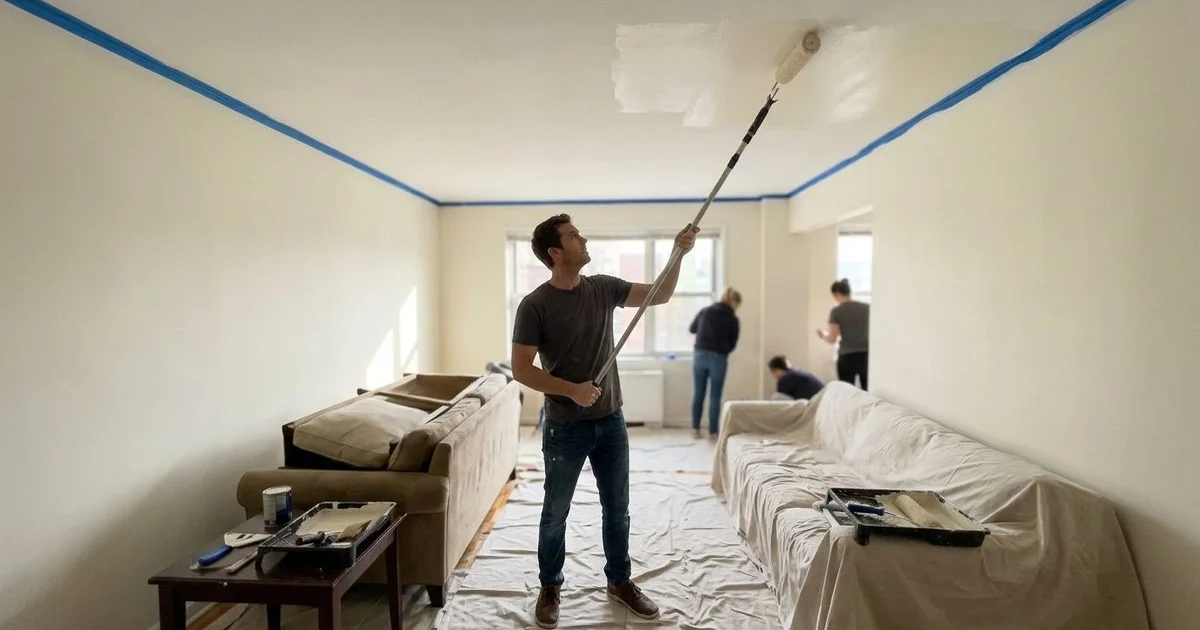
The First Decision in Every Interior Project
Whether to paint ceilings and trim with walls is the initial scope question that shapes your budget, timeline, and final result. Bundling all surfaces into one project delivers the cleanest finish and the highest value per dollar. Splitting them into phases keeps initial costs lower but means the crew sets up multiple times.
2026 Zillow data shows interior painting is the top pre-listing project for sellers, and a complete refresh eliminates the stark contrast between new wall color and aging trim. Our interior painting scope page explains what each level of service includes.
Ceilings Always Go First
Gravity dictates the sequence. Rolling ceiling paint throws a fine mist of microscopic droplets that land on everything below. Painting the ceiling first means that spatter falls on walls that have not received their finish coat yet.
This top-down approach also produces sharper lines. Cutting a straight wall edge against an already-dry ceiling is far more controlled than trying to work the other direction. Setting up ladders and drop cloths once for the entire room instead of repeating the process saves meaningful labor hours.
A dead-flat ceiling finish cuts overhead glare and hides minor drywall seams. We use flat white for nearly all residential ceilings unless a high-moisture bathroom calls for a mildew-resistant satin formula.
Trim Enamel vs Wall Paint
Comparing trim paint vs wall paint comes down to daily abuse. Walls take light contact. Trim takes shoe scuffs, vacuum bumps, pet scratches, and constant hand contact. Standard wall latex breaks down under that punishment quickly.
Products like Sherwin-Williams Emerald Urethane Trim Enamel or Benjamin Moore Advance dry to a hard, furniture-like shell that handles a decade of daily wear.
| Feature | Wall paint | Trim enamel |
|---|---|---|
| Typical sheen | Flat, eggshell or satin | Semi-gloss or satin |
| Hardness | Softer and flexible | Harder, scuff-resistant shell |
| Leveling | Rolled, minor texture | Levels smooth to reduce brush marks |
| Cleaning | Gentle wiping required | Wipes clean easily with a damp cloth |
| Dry and recoat time | One to two hours | Four to sixteen hours |
The longer cure time for urethane-modified products is the trade-off. The result is a finish that withstands years of contact without chipping.
Interior Doors: Hang or Remove?
Painting interior doors while hanging on hinges is possible but produces inferior results. Laying them flat on sawhorses allows the self-leveling trim enamel to flow out evenly without drips or sags.
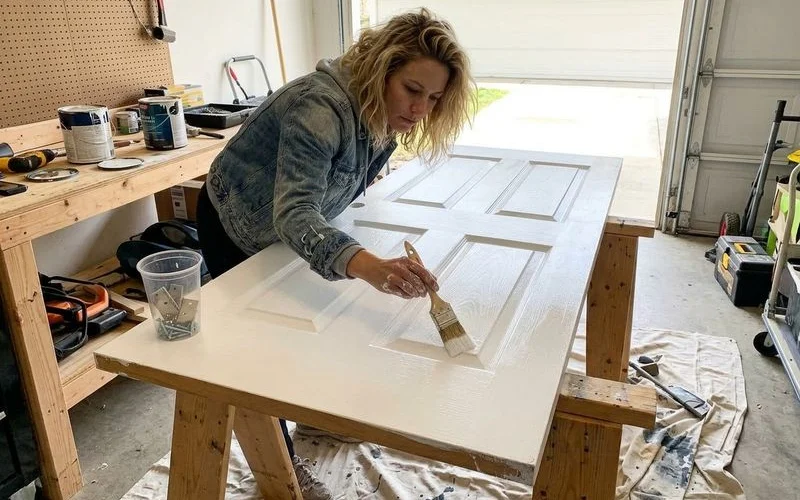
Based on 2026 Homewyse data, professional door finishing runs between $166 and $339 per door. Removing hardware completely rather than masking it ensures clean edges around hinges and knobs. Doors must dry fully on one side before flipping, and rehanging requires careful handling to avoid scratching the fresh enamel.
When Bundling Makes Sense
Painting everything at once is the most cost-effective approach because setup, furniture moving, and floor protection happen a single time. Consider the full package when:
- Major color changes make old trim look dingy against fresh walls
- Yellowed baseboards from aging oil-based enamel clash with new colors
- An upcoming sale where buyers notice chipped casings and scuffed baseboards
- Convenience matters and getting all disruption over in one visit is the priority

A complete refresh eliminates the visual gap between new wall color and aging woodwork.
When Phasing Makes Sense
Splitting the project over time manages cash flow without sacrificing quality later. Ceilings suffer minimal daily wear and can often go a decade or more between repaints while walls get refreshed every few years.
Practical phasing strategies include:
- Main living areas first, bedrooms later when budget allows
- Trim-only update when walls still look strong but baseboards and casings are scuffed
- Walls now, ceilings deferred if the existing ceiling paint is still clean and bright
The trade-off is repeated setup costs and the visual mismatch between new and old surfaces during the interim.
How Adding Surfaces Affects Cost
Adding ceilings and trim to a wall-only estimate typically increases the total by 60 to 90 percent. The drivers include extra material, specialized enamel products with longer dry times, and precise brushwork on detailed trim.
Our guide to interior painting cost breaks down exactly how each variable shows up in a formal proposal.
- Ceilings: Tall or vaulted spaces require scaffolding and extended setup time.
- Trim and baseboards: Detailed brushwork takes significantly longer per linear foot than rolling broad walls.
- Doors: Paneled doors need careful cutting in and drying time on both sides.
Color Strategy for Trim and Ceilings
A consistent trim color throughout the home creates a cohesive, high-end look. Soft warm whites like Sherwin-Williams Alabaster or Benjamin Moore White Dove in semi-gloss tie disjointed rooms together and simplify future touch-ups because only one trim paint needs to be stored.
Flat white is the standard ceiling choice. A bright white ceiling reflects maximum light and makes rooms feel taller. Dark-colored interior doors are a popular 2026 design trend that creates striking contrast, though darker shades require extra coats and careful application.
Popcorn Ceilings
Textured popcorn ceilings installed before the mid-1980s may contain asbestos. The EPA banned asbestos in spray-applied surfacing in 1978, but existing stock was used by builders into the early 1980s. Test any pre-1985 popcorn texture before scraping. If positive, certified abatement professionals handle the removal at $5 to $20 per square foot. Limestone & Lacquer does not remove popcorn ceilings but can advise on whether painting over the existing texture is a viable alternative.
Crown Molding and Built-Ins
Detailed architectural trim adds character but requires significant labor. Every seam where wood meets the wall gets a fresh bead of acrylic-latex caulk. Glossy built-ins need thorough sanding for adhesion. Wainscoting and window seats demand slow, precise brush application. If your home has extensive trim, deciding early whether to include it prevents surprises in the final estimate.
The Bundling Advantage
Painting ceilings, trim, and doors with walls in a single visit delivers the cleanest possible finish. If the full package stretches the budget, Limestone & Lacquer helps you prioritize which surfaces matter most right now. Either way, your written quote lists each surface separately so you see exactly where your investment goes.