
Paint Fails Gradually
Exterior coatings do not fail overnight. The decay is slow enough that most homeowners miss the early signs house needs exterior painting until significant damage is underway. A simple walk-around inspection twice a year reveals problems while they are still inexpensive to address.
Our team uses a structured evaluation during every exterior painting in Georgetown consultation. The same checklist works for any property owner who wants to decide whether to act now or wait another season.
Chalking
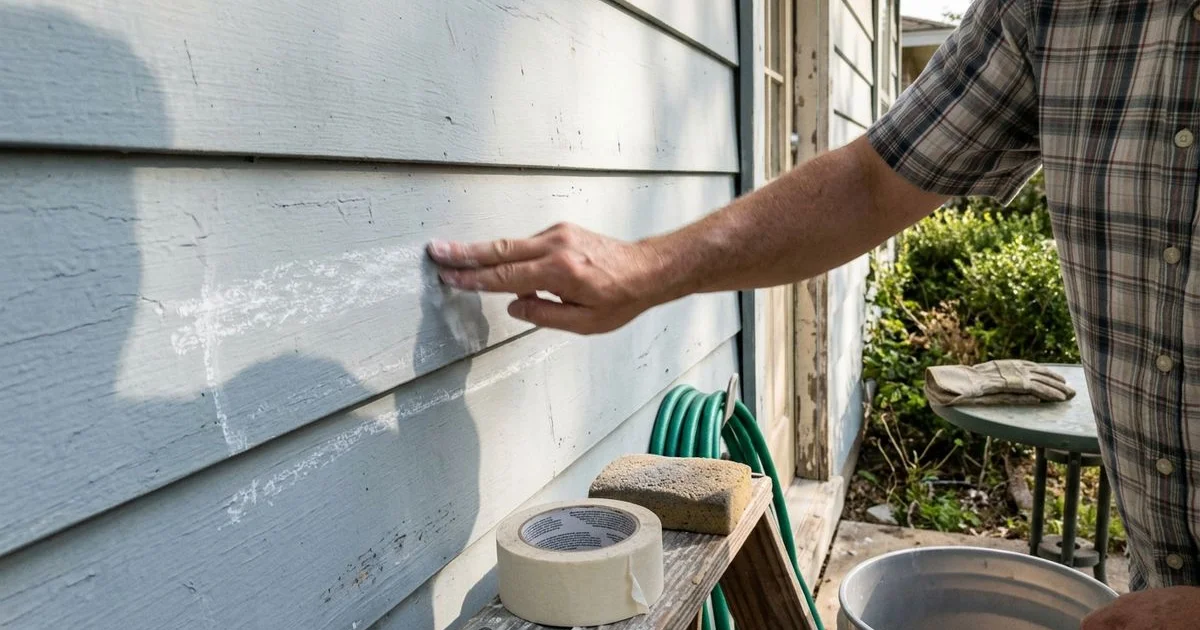
Chalking occurs when ultraviolet radiation breaks down the chemical binders that hold paint pigments together. The result is a fine powder on the surface that transfers to your hand when you rub the wall.
Light chalking on an older application is normal and not urgent. Heavy chalking means the protective film has deteriorated and the substrate is increasingly exposed. Builder-grade paints often chalk heavily within five to seven years. Premium 100-percent acrylic products like Sherwin-Williams Emerald resist this degradation and maintain their binder integrity for 15 years or longer.
Test your walls with this method:
- Wipe a dark cloth firmly across a south-facing or west-facing wall
- Check the cloth for a heavy layer of dusty residue
- Look at the foundation below the siding for colored streaks deposited by rainwater
Heavy chalking requires thorough power washing and a bonding primer before new paint can adhere properly.
Fading
Fading happens when pigments lose chemical stability under constant sun exposure. Compare a highly exposed wall with a shaded area behind a downspout to gauge severity. Color loss indicates a thinning film that offers less weather resistance.
Fading alone is rarely an emergency. A faded house looks tired, but the siding may still be protected from moisture. However, severe fading typically accompanies heavy chalking and signals the coating is nearing the end of its functional life.
Key factors that accelerate fading:
- Color choice: Dark blues and deep reds fade much faster than light tans or whites
- Orientation: South and west walls take the harshest Central Texas afternoon sun
- Sheen: Flat paints show fading earlier than satin finishes
Peeling, Flaking, or Blistering
Peeling exterior paint indicates total adhesion failure, leaving the substrate completely exposed to the elements. This is the one warning sign that should never be ignored. Blisters typically form when trapped moisture or intense heat pushes the coating away from the surface underneath.
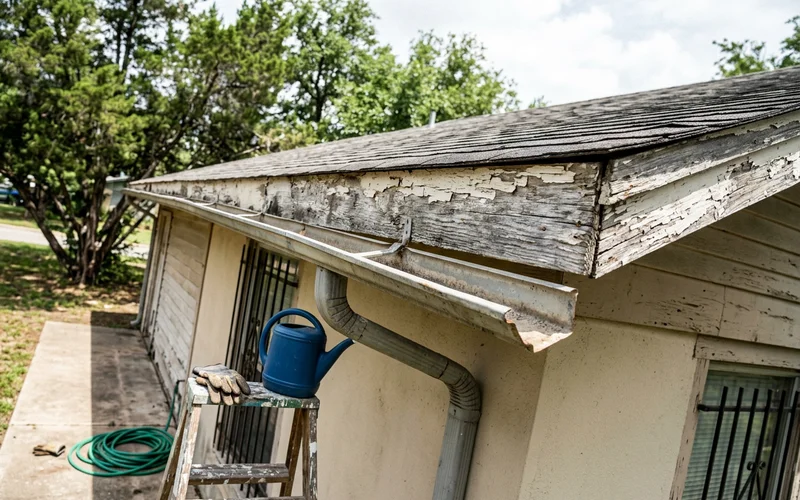
Inspect these high-risk zones closely:
- Fascia and soffits along the roof edge where gutters may overflow
- Window sills and flat trim surfaces where water pools
- Garage door trim and exterior door frames near grade level
- Areas near sprinklers and downspouts that stay wet constantly
2026 housing data shows that repairing hidden wood rot before painting typically adds $500 to $1,500 to a project. Catching peeling early prevents that moisture intrusion and keeps the budget manageable.
Cracked or Missing Caulk
Failed caulk breaks the weather seal at joints where siding meets trim, around windows, and at corner boards. This gap allows rain to penetrate behind the protective barrier and accelerate structural damage.
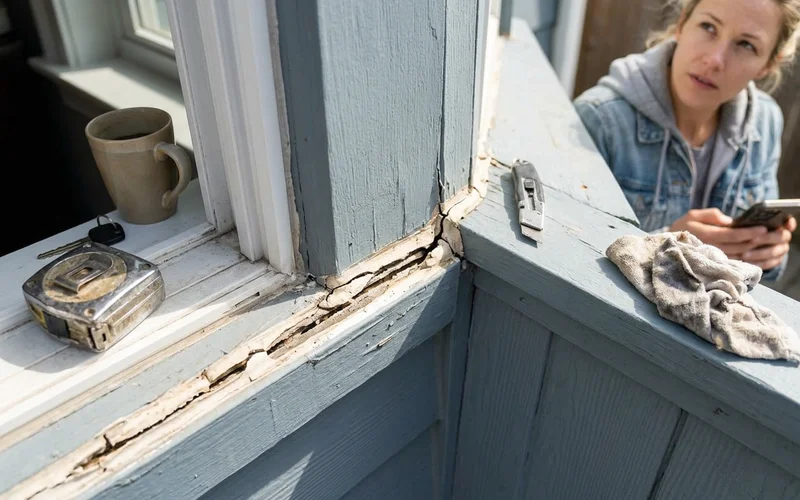
Caulk shrinks and pulls away from wood as it ages in the sun. The resulting gap lets water pool behind siding, which is a leading cause of severe peeling and internal wood rot. Inspect exterior caulk lines annually. Replacing failed caulk is one of the cheapest maintenance tasks that prevents thousands of dollars in future repairs.
Exposed or Soft Wood
Gray, bare wood means the coating is entirely gone and decay has started. Test suspicious spots by pressing gently with a flathead screwdriver. If the tool sinks with minimal hand pressure, active rot is present.
Rotten sections must be replaced or professionally repaired before any new primer or paint can go on. Painting over wet, deteriorating wood guarantees the new finish will blister and peel within months. According to 2026 contractor estimates, replacing severely rotted exterior framing can cost upward of $5,000. Catching soft wood early and replacing a single board keeps the bill minimal.
Stucco Cracks
Hairline cracks in stucco are common as Georgetown homes settle into Williamson County’s reactive clay soils. Small surface fissures can usually be bridged with a high-quality elastomeric coating that stretches up to 300 percent. Wider cracks that keep growing suggest a more serious issue with foundation movement or internal moisture.
Our guide to elastomeric coatings for stucco explains the best sealing options. Traditional stucco resurfacing costs roughly $6 to $12 per square foot in 2026. Protecting existing finish with the right flexible coating costs a fraction of full replacement. Have any crack wider than a credit card inspected by a professional before painting.
Urgency Reference
| What you see | How urgent | Why it matters |
|---|---|---|
| Light chalking, some fading | Plan within a year or two | Mostly cosmetic, but the film is thinning |
| Heavy chalking everywhere | Plan soon | The binder is gone, protection is weakening |
| Cracked or missing caulk | Fix immediately | Rainwater gets behind the barrier |
| Peeling or blistering | Act now | Bare substrate is fully exposed |
| Soft or rotten wood | Act now | Damage spreads quickly and multiplies costs |
| Wide or growing stucco cracks | Get it inspected | Points to active moisture or structural movement |
Photograph problem areas with a date stamp and compare images a few months later to track acceleration.
The Financial Cost of Waiting
Paint is vastly cheaper than structural carpentry. Delaying an exterior project almost always increases the final bill. When you repaint while the substrate is still sound, the job consists primarily of washing, light prep, and fresh coats.
A typical Central Texas home exterior paint job averages $3,177 to $5,800 in 2026. Adding extensive wood rot repair can easily double that figure. In harsh sun and heavy rain, a delay of just one or two years makes a significant financial difference.
How Often Should You Expect This?
Repaint intervals depend on siding material, product quality, and sun exposure. Wood trim demands attention fastest. Brick and fiber cement painted with premium acrylics can last 10 to 15 years. West-facing walls degrade faster than protected east-facing surfaces.
Our guide on how often to repaint covers typical ranges for Central Texas homes. To maximize the lifespan of your next paint job, specify a top-tier product like Benjamin Moore Aura or Sherwin-Williams Emerald. The higher material cost is offset by extending the repaint interval significantly.
Vulnerable Spots to Check First
Certain architectural features fail long before the broad sides of the house show wear. If these trouble spots still look solid, the rest of the building is usually in good condition.
- Bottom of garage door trim where splashing rain pools
- Window sills taking direct sun and standing water
- Gable ends and west-facing walls absorbing the hardest afternoon heat
- Behind large shrubs and near sprinklers where trapped humidity prevents drying
- Porch posts and railings enduring constant physical contact
- Areas directly under gutters especially if they overflow during storms
Signs of a Deeper Problem
Recurring failures in the same spot often indicate active moisture intrusion or a structural defect. Fixing the root cause is the only way a new coat will survive.
- Peeling in the exact same spot after a recent repaint suggests water leaking from behind the siding
- Bubbling near bathrooms or kitchens usually means interior humidity is pushing outward through walls
- Stucco cracks expanding quickly point to active foundation movement
- Brown staining running from windows reveals failed flashing that needs replacement
Limestone & Lacquer points these structural issues out clearly during estimates. Applying fresh paint over an unresolved leak is a waste of budget.
Get a Professional Assessment
If you are unsure whether you are looking at minor chalking or advanced failure, a professional evaluation provides the facts. Book a free exterior estimate and our Georgetown team will walk the property with you, identify what needs immediate attention, and explain what can safely wait.