
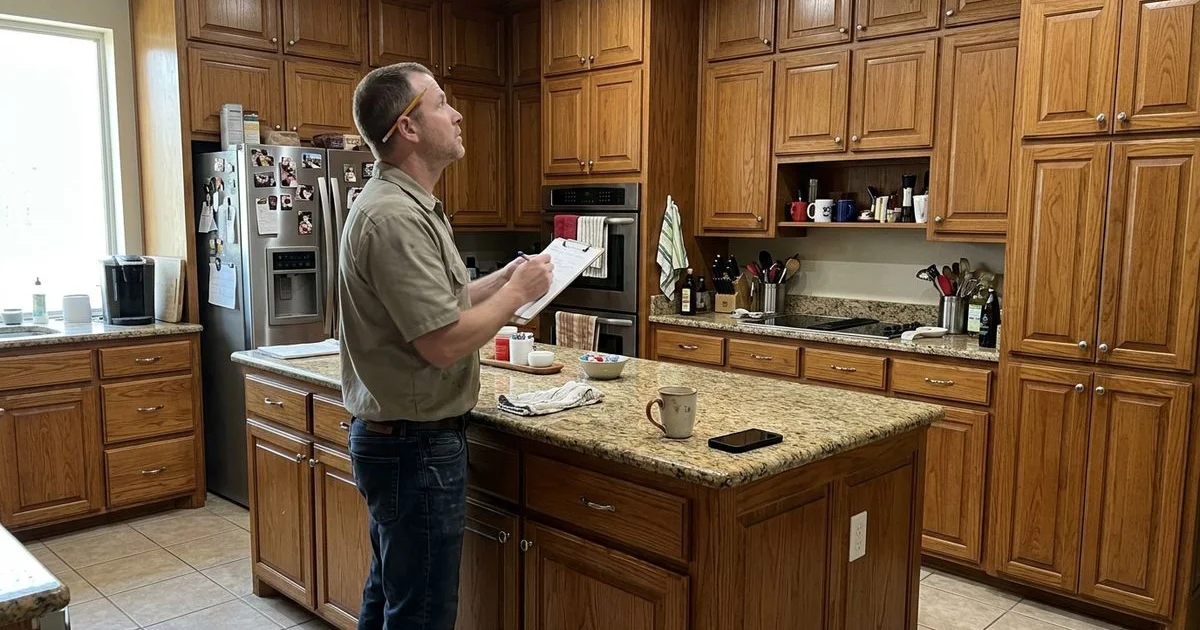
What Determines Cabinet Painting Cost
The total cost of a cabinet painting project depends on four primary factors: the number of doors and drawer fronts, the application method, the condition of the existing finish, and the products used. Understanding these drivers helps you evaluate contractor quotes and avoid surprises.
A standard 10-by-12 kitchen with 20 to 30 doors and drawer fronts typically falls between $2,500 and $7,000 for professional cabinet refinishing in Texas as of 2026. Larger kitchens with islands, pantry cabinets, or built-in hutches push toward the upper end.
Pricing Structure: Per Linear Foot vs Flat Rate
Most professional cabinet painters price by the linear foot of base cabinetry. This measurement runs along the floor at the base of your lower cabinets and includes upper sections above. The 2026 Texas average sits between $30 and $60 per linear foot for a full spray finish.
Some contractors offer flat-rate pricing based on kitchen size categories. A small galley kitchen might quote at $2,500 to $3,500 flat. A mid-size kitchen with an island runs $4,000 to $5,500. Large open-concept kitchens with 40 or more doors reach $6,000 to $7,500 or higher.
| Kitchen size | Door/drawer count | Typical 2026 cost |
|---|---|---|
| Small galley or U-shape | 15 to 20 | $2,500 to $3,500 |
| Standard L-shape with island | 25 to 35 | $4,000 to $5,500 |
| Large open-concept | 35 to 50+ | $6,000 to $7,500+ |
These ranges assume a standard two-coat spray finish with bonding primer. Custom colors, glazing, or distressed finishes add to the total.
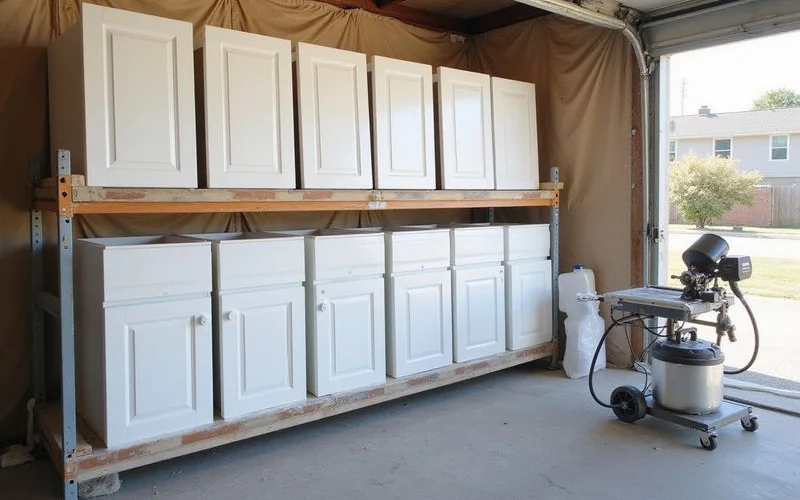
Spray vs Brush: How the Method Affects Price
The application method is the single largest variable in cabinet painting cost. Spraying requires more setup time, dedicated drying space, and specialized HVLP equipment. That investment produces a smoother, factory-grade surface that justifies the higher price for most homeowners.
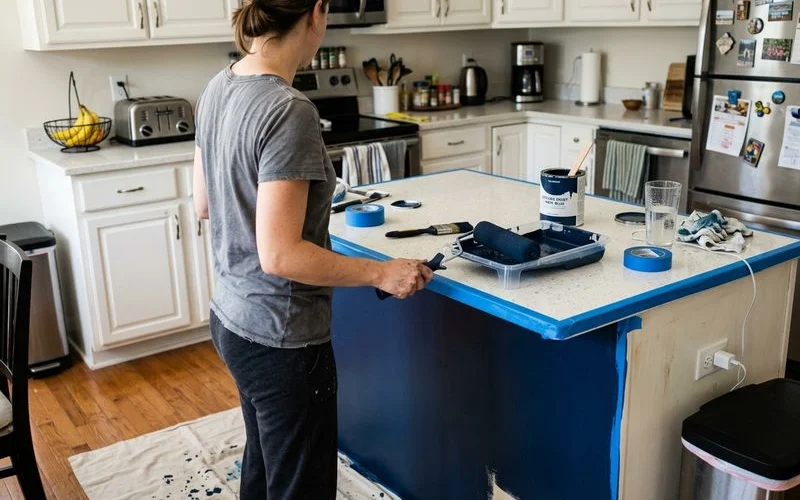
Brush-and-roll application costs less up front because it requires minimal masking and no spray equipment. However, the labor hours for hand-brushing each panel, sanding between coats, and managing drips on detailed doors can close the gap.
For a detailed breakdown of how each method affects finish quality and timeline, read our comparison of sprayed vs brushed finish options.
Spray finish cost: $30 to $60 per linear foot. Higher setup cost, faster application, smoother result.
Brush-and-roll cost: $15 to $35 per linear foot. Lower setup, more labor hours, visible texture on close inspection.
Five Factors That Drive Your Final Quote
1. Number of doors and drawers. Each door requires removal, labeling, degreasing, sanding, priming, painting, drying, and reinstallation. More doors means more labor hours.
2. Cabinet condition. Peeling laminate, heavy grease buildup, water damage, or previous paint failure all require additional prep. A kitchen with clean, solid wood boxes in good condition costs less to paint than one needing extensive surface repair.
3. Product quality. Premium hybrid enamels like Sherwin-Williams Emerald Urethane or Benjamin Moore Advance cost $55 to $75 per gallon. Budget alkyds run $30 to $40. The premium products cure harder, resist yellowing, and hold up better around sinks and dishwashers.
4. Color change complexity. Going from dark stained oak to bright white requires aggressive grain filling and additional primer coats to prevent bleed-through. Lighter transformations need less prep.
5. Kitchen accessibility. Tight galley kitchens with limited staging space slow the crew down. Homes in Georgetown with large garages or covered patios give crews ideal off-site spray areas, which keeps the project on schedule.
What Is Included in a Professional Quote
A transparent cabinet painting estimate lists every step and product by name. Knowing what is included helps you compare quotes across contractors.
Standard scope includes degreasing all surfaces with a TSP solution or Krud Kutter, scuff-sanding existing finishes for adhesion, applying one coat of bonding primer such as INSL-X Stix, applying two coats of enamel topcoat, removing and reinstalling all doors, drawers, and hardware, and daily cleanup of your kitchen space.
Items that may fall outside the standard quote include interior cabinet box painting, new hardware installation, soft-close hinge upgrades, and repairs to water-damaged or delaminating boxes.
Painting vs Replacing: The Cost Comparison
The financial case for painting over replacement is overwhelming in most situations. A full kitchen cabinet replacement runs $20,000 to $40,000 in 2026, including demolition, new boxes, countertop adjustments, and plumbing reconnections. Professional painting delivers a visual transformation for 10 to 25 percent of that cost.
Painting also avoids weeks of construction disruption. A spray-finish cabinet job typically takes four to six days of active work. A full replacement project can stretch six to ten weeks.
The main scenario where replacement makes more sense is when the cabinet boxes themselves are structurally failing, warped, or water-damaged beyond surface repair.
How to Compare Quotes Fairly
When reviewing multiple bids, compare them on scope rather than bottom-line price alone. The cheapest number often hides a brush application using builder-grade paint, no primer, or skipped degreasing.
Ask each contractor these specific questions. What primer and topcoat brands will you use? Will doors be sprayed or brushed? Are doors finished off-site or in place? How many coats of primer and paint are included? Is daily kitchen cleanup part of the scope?
A detailed, itemized quote protects you from surprise charges and gives you confidence that the price reflects real work, not shortcuts.
Getting Your Estimate
Limestone & Lacquer Painting Co. provides free on-site kitchen evaluations across Georgetown and surrounding communities. Our estimator counts every door, checks existing finish conditions, and delivers a fixed written quote with product names, coat counts, and a projected timeline. Reach out to schedule your cabinet assessment.