
The Application Method Shapes the Result
Choosing between a sprayed vs brushed cabinet finish determines the texture, durability, and cost of the entire project. The difference is immediately visible under kitchen lighting. Spraying produces a smooth, factory-grade surface. Brushing leaves a subtle handmade texture that some homeowners prefer but most find distracting on cabinetry.
With full kitchen replacements costing $20,000 to $40,000 in 2026, professional sprayed cabinet refinishing delivers a modern aesthetic at a fraction of that price. Understanding how each technique works helps you compare bids accurately and set realistic expectations.
How HVLP Spraying Works
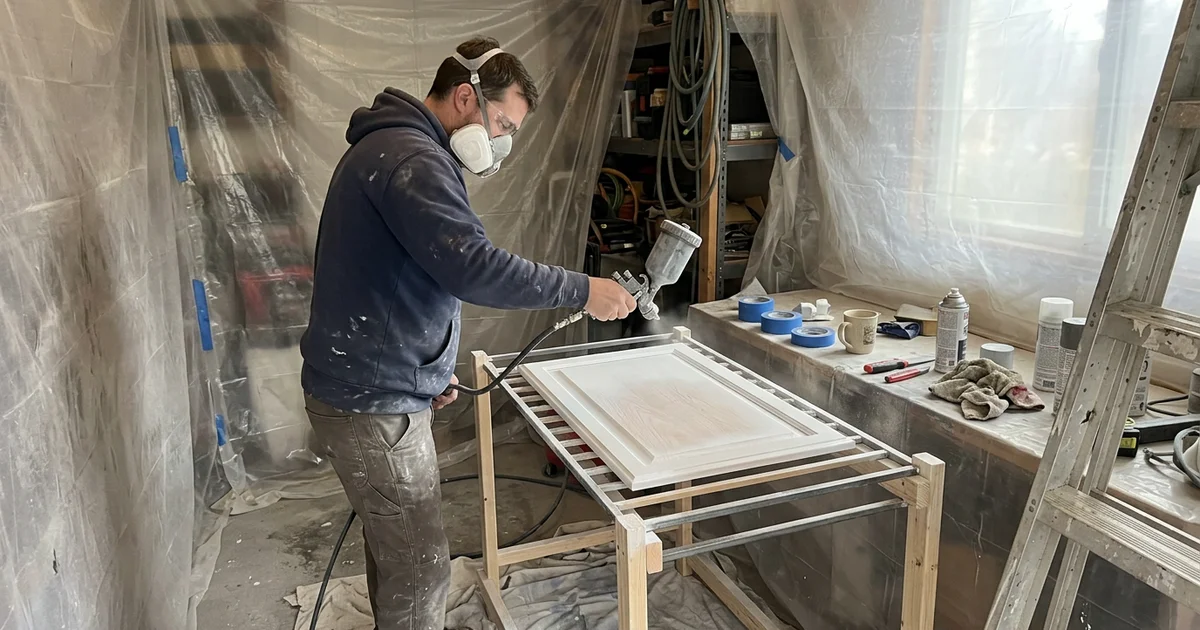
High-volume, low-pressure systems like the Fuji Semi-Pro 2 push air at a gentle 3 to 10 PSI. This controlled pressure converts premium enamels into a fine, uniform mist that lays down thin, even coats without any roller stipple or brush marks.
The standard spray process involves two zones:
- Doors and drawer fronts are removed, labeled, and transported to a separate spray area. Laying them flat on drying racks allows the self-leveling enamel to flow out evenly.
- Boxes and face frames remain in place. The kitchen is sealed with plastic sheeting, and these stationary components are sprayed or carefully finished by hand.
The result under harsh kitchen lighting is a uniform, glass-smooth surface that closely resembles factory-finished cabinetry.
How Brush-and-Roll Works
A painter uses a fine synthetic brush on intricate molding profiles and a small microfiber roller on the larger flat panels. Doors are laid flat on sawhorses to prevent drips during drying.
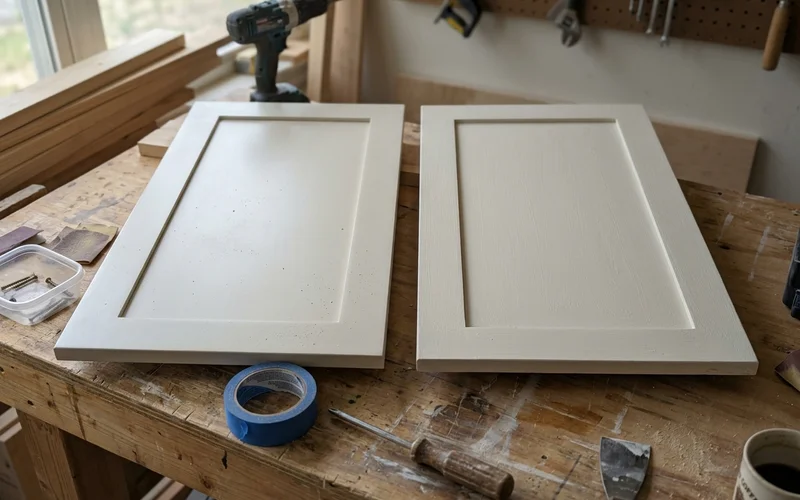
High-quality self-leveling paints like Benjamin Moore Advance minimize visible texture, but faint brush marks remain detectable on close inspection. The manual process requires careful technique and aggressive sanding between coats to flatten any raised texture.
Performance Comparison
Professional labor rates average $45 to $55 per hour across the US in 2026. Application method directly affects total project hours and final cost.
| Feature | Sprayed (HVLP) | Brushed and rolled |
|---|---|---|
| Finish quality | Smooth, factory-like | Some brush or roller texture |
| Coat thickness | Thin, even | Can vary |
| Detailed door panels | Even coverage in grooves | Harder to keep consistent |
| Masking required | Extensive | Moderate |
| Setup time | More | Less |
| 2026 average cost | $2,000 to $6,500 | $900 to $1,500 |
| Cure predictability | Fast, consistent | Thicker spots cure slower |
Off-Site vs In-Place Finishing
Most professional refinishers process doors in a controlled environment rather than spraying them on their hinges. A temperature-controlled shop or dedicated spray area prevents airborne dust from embedding in the wet finish.
- Doors off-site: Laid flat on custom drying racks for even coat application. Both sides finish properly, and dust contamination is minimal.
- Doors in place: The job starts faster, but reaching back edges requires awkward brush angles. Gravity causes drips on vertical surfaces, and dust from household activity is harder to control.
Cabinet boxes are always finished in the kitchen. That is where rigorous masking matters most, as heavy-duty plastic sheeting contains the fine mist and prevents overspray from reaching adjacent surfaces.
Overspray Control
Proper containment eliminates overspray concerns entirely. The protocol includes:
- Sealing the kitchen with thick plastic sheeting at every doorway
- Covering counters, backsplashes, and floors with heavy rosin paper and tape
- Masking adjacent walls around the perimeter of cabinet boxes
- Spraying doors in a separate area to keep the heaviest paint volume out of the living space
- Using HVLP equipment with low-pressure atomization that dramatically reduces floating mist
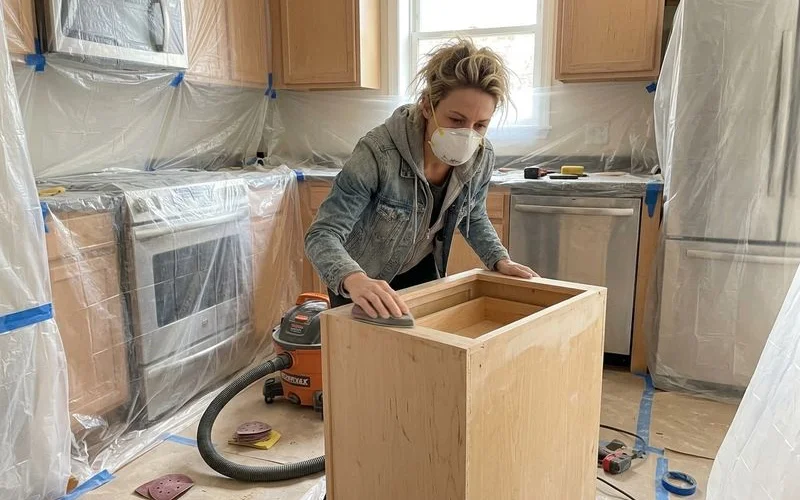
All protective barriers are carefully removed once the enamel cures. The only newly painted surfaces are the cabinets themselves.
When Brushing Makes Sense
Hand-painting is the practical choice in a few specific situations:
- A small bathroom vanity that does not justify extensive masking
- Quick touch-ups on existing scuffs or minor hardware damage
- Built-in bookshelves in rooms where sealing for spray is impractical
For a full kitchen renovation, spraying the doors and drawers delivers a dramatically superior result. The factory-grade surface holds up better to daily cooking-environment wear.
Primer Is the Foundation
Regardless of application method, the primer coat determines how well the topcoat bonds and performs. A high-quality bonding agent like INSL-X Stix ensures the enamel never peels from previously finished or laminated surfaces.
Zinsser B-I-N shellac primer is the standard choice for knotty pine or wood with heavy tannin bleed. The shellac permanently blocks yellow discoloration from migrating through white paint. A sprayed primer layer dries perfectly flat, establishing the smooth base that subsequent color coats build on.
Coat System
The standard approach is three coats: one primer followed by two full coats of enamel. Light scuff-sanding with 220-grit paper between every layer promotes mechanical adhesion and eliminates any raised texture.
Products like Sherwin-Williams Emerald Urethane Trim Enamel are ideal for spray application. The urethane-modified alkyd formula allows extremely thin, even layers that cure to a hard, furniture-like shell. Those micro-thin coats dry faster and harder than thick brushed applications.
Cabinet Interiors
The inside of cabinet boxes is difficult to mask for spray application. Most homeowners skip interior painting to save significant labor cost. The most common compromise is painting only the interiors of glass-front upper cabinets where the inside surface is visible.
When interior painting is requested, brush-and-roll application is typically used for the enclosed box spaces.
How Lighting Reveals the Difference
Morning sunlight raking across cabinet surfaces highlights every texture variation. Deep trending colors like dark greens and charcoals expose brush strokes far more than light whites. Sprayed doors produce a uniform reflection under all lighting conditions. Brushed doors carry a visible handmade texture that becomes especially noticeable under under-cabinet task lighting.
Most Georgetown homeowners strongly prefer the spray finish after viewing physical comparison samples.
Questions to Ask When Comparing Bids
The cheapest cabinet painting quote often conceals a basic brush application with lower-quality materials. Ask these specifics:
- Will you spray or brush the doors and drawers?
- Will doors be finished in place or transported to a controlled spray area?
- Which primer and enamel products will you use by name?
- How will you protect the kitchen from airborne overspray?
Our guide on what to expect walks through the entire cabinet painting process day by day. Limestone & Lacquer lists every product and technique in the written quote so you know exactly what you are paying for. Contact our Georgetown team for your cabinet estimate.