
The Short Answer
Most kitchen cabinets can be painted, but the material underneath determines how the finish will look and how long it will last. Solid wood, plywood, and MDF respond very well to professional paint systems. Thermofoil and certain laminates come with conditions that you need to understand before committing.
Limestone & Lacquer Painting Co. evaluates cabinet material as the first step of every cabinet refinishing consultation. Knowing what you have saves you from investing in a process that might not deliver the results you expect.
Material-by-Material Breakdown
Solid Wood (Oak, Maple, Cherry, Birch)
Solid wood is the ideal candidate for painting. The natural fiber structure accepts primer and enamel beautifully. Maple and birch have tight, fine grain that produces an almost factory-smooth result under spray application. Cherry and oak have more pronounced grain patterns that show through paint unless a grain filler is applied first.
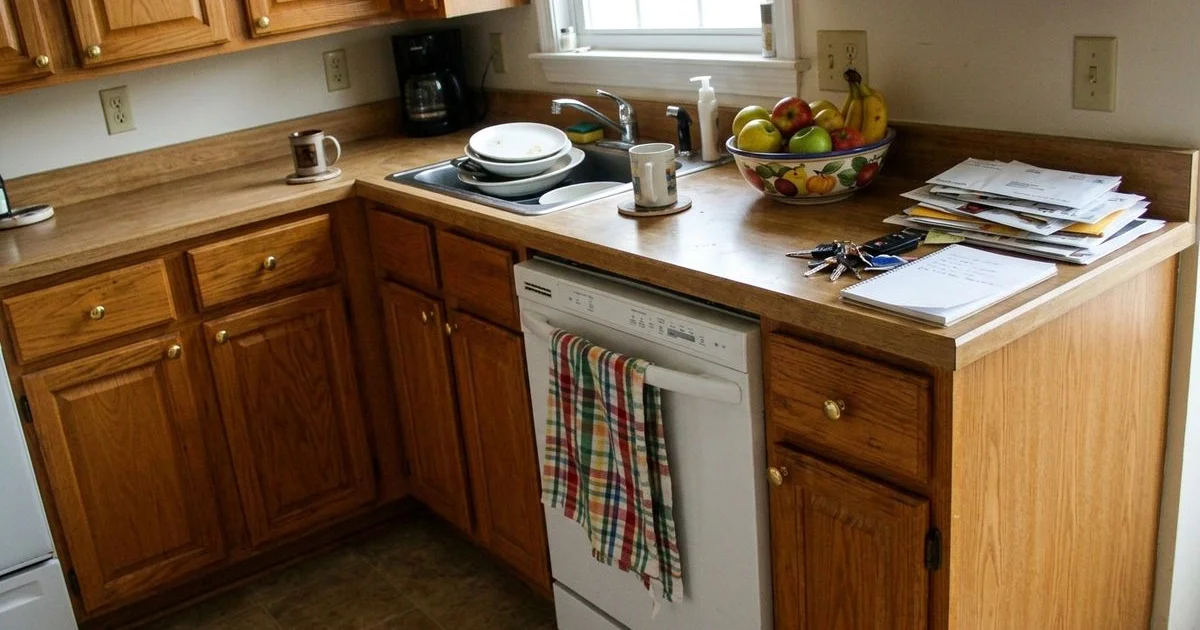
Honey oak cabinets from the 1990s and early 2000s are the single most common cabinet painting project we see in Georgetown homes. These kitchens were built with excellent boxes that have decades of structural life remaining. The only thing that dates them is the amber-toned finish.
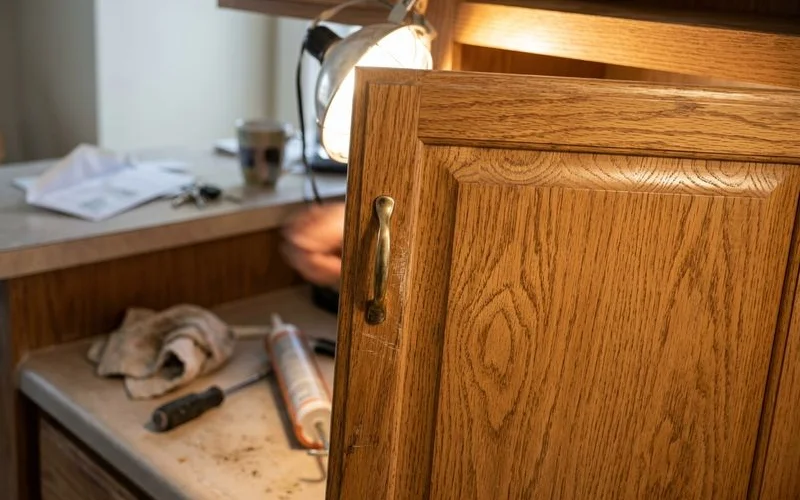
Results on solid wood: Excellent adhesion, predictable finish, very durable.
Plywood Boxes with Veneer Doors
Many mid-range and builder-grade kitchens use plywood cabinet boxes with veneer-faced doors. These paint well as long as the veneer is intact and firmly adhered. Loose veneer edges need to be glued and clamped before any primer goes on.
The veneer surface accepts bonding primer the same way solid wood does. The key risk is delamination after painting, which only happens if the veneer was already lifting before the project started. A thorough inspection catches this early.
Results on veneer-faced plywood: Very good, comparable to solid wood when veneer is intact.
MDF (Medium-Density Fiberboard)
MDF doors and drawer fronts are common in modern, budget-friendly kitchens. The smooth surface actually produces the most factory-like painted finish of any material because there is zero grain pattern to telegraph through.
The challenge with MDF is edge sealing. Cut edges absorb moisture rapidly, which can cause swelling. Professional painters seal MDF edges with a dedicated primer before the topcoat to prevent this problem. MDF also cannot tolerate heavy moisture exposure near sinks and dishwashers as well as solid wood can.
Results on MDF: Extremely smooth finish. Requires careful edge sealing and moisture management.
Thermofoil
Thermofoil doors are made by heat-wrapping a thin vinyl skin over an MDF core. When the foil is in perfect condition, it can be scuff-sanded and painted with a bonding primer like INSL-X Stix.
The problem is that thermofoil frequently delaminates around heat sources. Doors near ovens, dishwashers, and toasters are the first to show peeling edges. Once the foil lifts, moisture gets underneath and the MDF core swells.
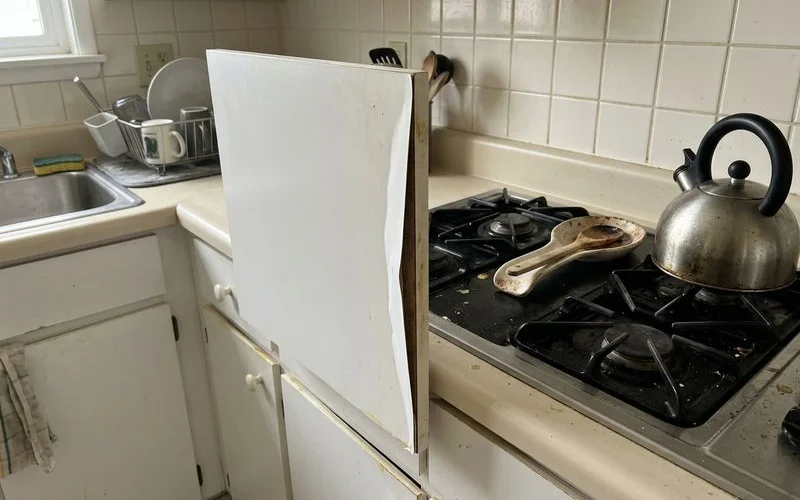
If the thermofoil is intact: Paint with bonding primer works. The finish is acceptable but not as durable as paint on bare wood.
If the thermofoil is peeling: Strip the vinyl, repair the MDF core, then paint as bare MDF. This adds cost but produces a far better long-term result.
High-Pressure Laminate (HPL)
High-pressure laminate surfaces like Formica are slick and resist adhesion. They require aggressive deglossing with a chemical agent like Liquid Deglosser and a high-tack bonding primer. Results are functional but tend to show wear at high-contact points like drawer edges and pull areas sooner than wood does.
Results on HPL: Functional for a budget refresh, but not as durable as painting bare wood or MDF.
Five Signs Your Cabinets Are Good Candidates
Not every kitchen is right for painting. Checking these five criteria during a quick self-assessment will tell you whether your cabinets qualify.
- Boxes are square and stable. Open a few doors and push gently on the sides. If the box flexes or feels soft, there may be water damage that needs repair before painting.
- Doors close properly. Warped doors that no longer sit flush indicate moisture problems that paint cannot fix.
- No active water damage. Check under the sink and near the dishwasher. Soft, swollen, or discolored areas need repair or replacement before refinishing.
- Surfaces are cleanable. Run a damp cloth across a door. If the existing finish wipes clean, it can be prepped for paint.
- You like the door style. Paint changes color but not profile. If you want shaker doors instead of raised-panel, consider refacing rather than painting.
What Will Not Work
A few scenarios make cabinet painting impractical or inadvisable.
Severely warped doors cannot be flattened with paint. If doors twist more than 1/4 inch, replacement doors are the better path.
Active water damage inside boxes means the structure is compromised. Paint seals the surface but cannot restore structural integrity to waterlogged particleboard.
Metal cabinets from mid-century kitchens require specialized industrial primers and typically yield a finish that chips more easily than wood-based options.
What the Process Looks Like
Professional cabinet painting follows a precise sequence regardless of material type. Understanding the steps helps you evaluate contractor quotes and set realistic timeline expectations.
The process begins with a thorough degreasing of all surfaces using TSP or an equivalent cleaner. Kitchen cabinets accumulate years of cooking oil that is invisible but prevents paint adhesion. After degreasing, surfaces are scuff-sanded to create mechanical tooth for the primer.
A bonding primer goes on next, followed by two coats of premium enamel. Spray application delivers the smoothest result. Doors and drawer fronts are typically removed and finished off-site while face frames are sprayed or brushed in place.
For a detailed day-by-day walkthrough, see our guide on what to expect during a cabinet painting project.
Getting a Professional Assessment
The fastest way to determine if your cabinets are paintable is a professional in-home evaluation. Our team inspects material type, box condition, and existing finish to give you an honest recommendation. Contact Limestone & Lacquer to schedule your free assessment in Georgetown or surrounding areas.