
Light Comes First, Swatches Come Second
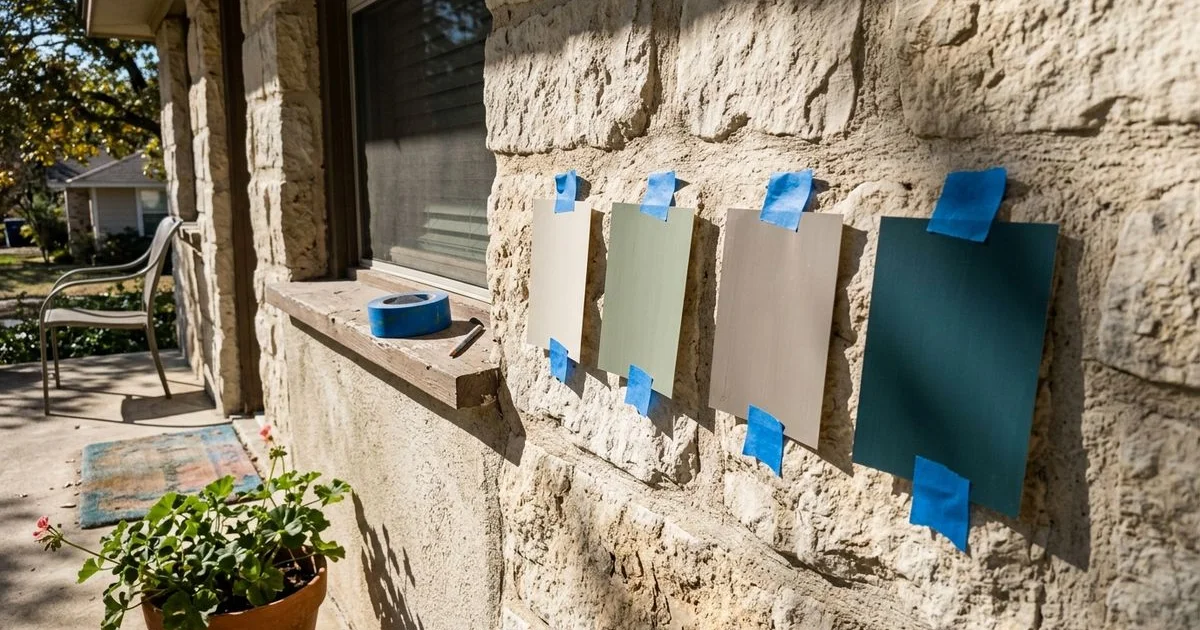
Central Texas sunlight makes color selection harder than most homeowners expect. The UV index here frequently hits extreme levels during summer, washing out even rich pigments on large wall surfaces. A soft paint chip can turn into a blinding shade once it covers a 40-foot exterior wall.
As Georgetown painters, we see this disconnect constantly. The only reliable way to choose colors is testing them where they will actually live, under the light conditions your home experiences daily.
Understand Light Reflectance Value
Every paint color has a Light Reflectance Value (LRV) on a scale from 0 to 100 that measures how much light it reflects. This number matters more in Central Texas than in overcast climates because bright sun amplifies the perceived lightness of any color.
South and west-facing walls receive the harshest direct light. Colors with an LRV between 40 and 60 provide balanced reflection without appearing washed out or overly dark. North-facing walls stay cooler and slightly gray, so they can handle warmer, richer tones.
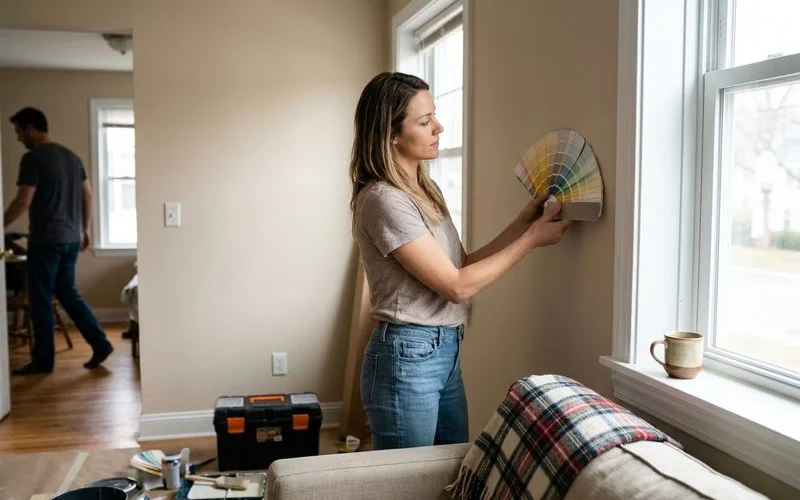
Interior rooms with large west-facing windows will look golden in the afternoon and flat in the morning. Judge the color at the time of day you use the space most.
Work Around Fixed Elements
The exterior of a Central Texas home typically includes materials that cost thousands of dollars to change. Evaluate these permanent features before considering any new paint color.
- Limestone or brick: Front facades and decorative accents
- Roof color: Charcoal, brown, weathered gray shingles, or standing seam metal
- Window frames: White, almond, or bronze fixtures
- Hardscape: Driveways, walkways, and retaining walls
Each fixed element carries a strong undertone. Classic Austin Chalk limestone leans cool and gray. Cordova Cream limestone has distinct warm, yellow undertones. A cool gray body color next to warm Cordova Cream often looks dingy. Warm greige or a soft white corrects that mismatch.
The fastest test is holding the sample directly against the stone. If the paint makes the stone look dirty, the color temperature needs adjusting.
The Three-Color Framework
Most homes look best with three exterior colors assigned to clear roles.
| Role | Where it goes | Tip |
|---|---|---|
| Body | Siding or stucco | Mid-tone or light, coordinated with stone undertones |
| Trim | Fascia, soffits, window and door trim | Clean white or soft off-white |
| Accent | Front door, shutters | Your chance for personality |
A soft body color like Sherwin-Williams Alabaster paired with a bold accent such as Iron Ore SW 7069 on shutters provides excellent contrast without visual clutter. Interior spaces follow the same logic: one main wall color through connected areas, bolder tones reserved for rooms you can close off, and a consistent white on all trim.
Sampling That Actually Works
Small paper chips are misleading at this scale. A two-inch square cannot represent how a color reads on an entire wall. Follow this sampling process to eliminate guesswork.
- Go big. Paint samples at least two feet square, or use large movable sample boards.
- Try peel-and-stick options. Brands like Samplize offer pre-painted decals that skip the mess of sample pots.
- Test multiple walls. Check a sunny elevation and a shaded elevation.
- Apply two coats. A single thin layer shows the old color underneath and skews results.
- Observe at different times. Morning, midday, and late afternoon light each tell a different story.
- Place samples next to fixed elements. Hold them against stone, brick, roofing, and hardscape.
- Step back. View from the street, not just up close.
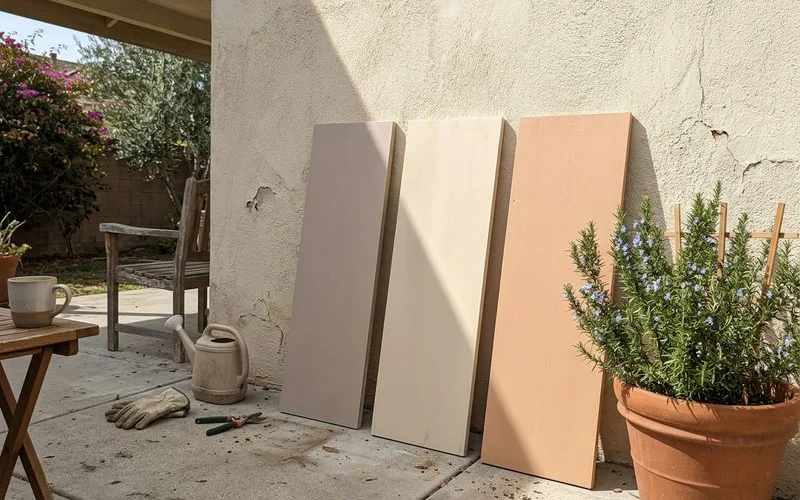
Exterior colors almost always look lighter on the house than on the chip. If you are torn between two shades, the slightly darker one usually reads as what you originally pictured.
Heat and Product Selection
Dark colors absorb more thermal energy, accelerating fading and risking blistering on west-facing walls. Premium formulas like Sherwin-Williams Emerald Rain Refresh include advanced UV protection and self-cleaning technology that washes away dirt during heavy rainstorms.
Never apply exterior paint when the surface temperature exceeds 90 degrees Fahrenheit. High heat causes the film to dry too quickly, ruining adhesion and leaving a patchy finish. Our exterior painting page covers the products that survive intense sun exposure locally.
Check HOA Rules Before Buying Paint
Many Georgetown neighborhoods enforce strict color standards through an Architectural Review Committee. Many HOA communities require formal approval before exterior painting can begin. The typical review process takes 30 to 45 days.
Some master-planned developments publish pre-approved palettes that speed things up. Skipping the submission step has cost homeowners thousands in forced repainting. Our guide to HOA color approval walks through the usual steps and timing.
What a Color Consultation Covers
Every Limestone & Lacquer Painting Co. exterior project includes a dedicated color consultation. This step prevents costly mistakes and ensures the final result matches your vision.
- Evaluating fixed elements and undertones in person
- Suggesting a short list of body, trim, and accent options
- Pulling HOA-approved palettes when needed
- Painting large sample patches for real-world evaluation
- Recommending the right sheen for each surface based on condition and exposure
The focus is always a classic look that will still read well in five or ten years, not a trend that dates quickly.
Common Color Mistakes to Avoid
- Choosing from a tiny chip under kitchen lights. The color looks entirely different outside or in a sunny room.
- Ignoring the roof. A body color that clashes with the roof undertone makes the whole house feel disconnected.
- Stark white trim against warm stone. Bright cool whites like SW High Reflective White can make creamy limestone look dingy.
- Too many colors. More than three exterior shades typically looks busy on residential homes.
- Forgetting the streetscape. Your home is part of a block, and clashing with neighbors reduces curb appeal for everyone.
Interior Tips for Texas Light
The same directional light principles apply indoors.
- North-facing rooms get cooler, softer light and benefit from warmer colors to avoid feeling gray.
- West-facing rooms glow intensely in the afternoon, making colors look warmer and more saturated.
- Open floor plans look best with one main wall color carried through, bold accents reserved for enclosed rooms.
- Ceilings usually read best in flat white or a very light version of the wall color.
Swapping old light bulbs for LEDs in the 3000K to 4000K range provides clean, neutral light that will not distort your wall colors at night.
Narrow Down, Then Commit
Pick two or three finalists and live with the samples for a few days. Observing the shifts from sunrise to sunset ensures you will be satisfied with the final result. Once you are ready, your selections are locked into a written scope so there is no confusion on painting day.
Contact our Georgetown team to schedule your consultation and get started.